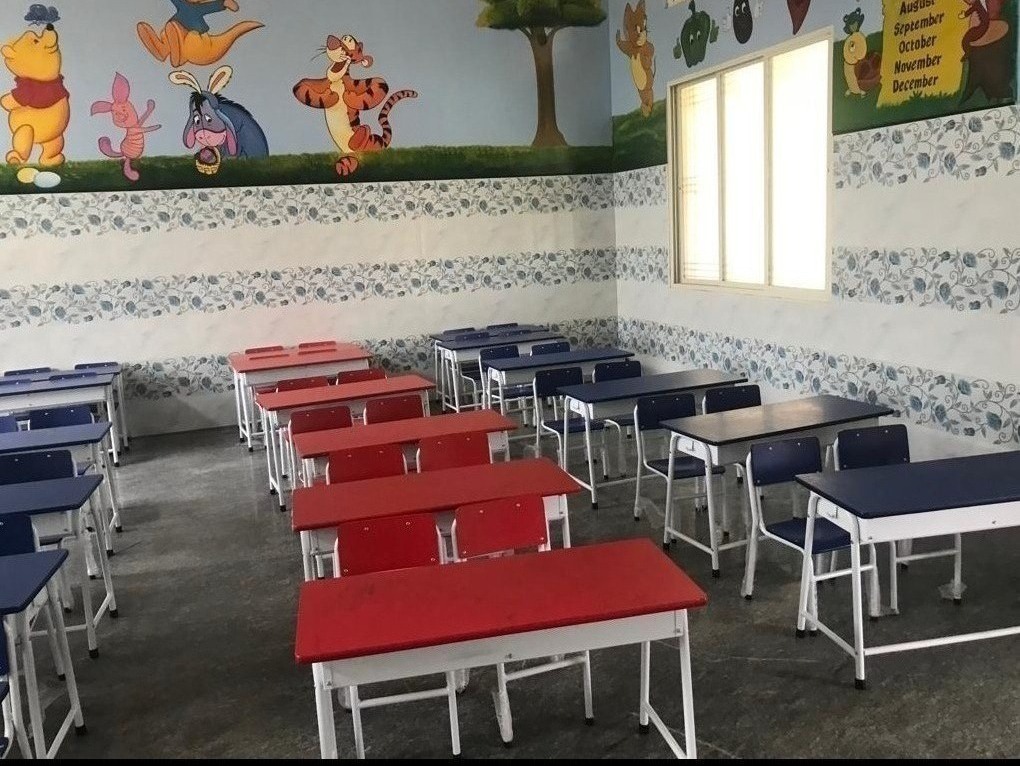
Ergonomics in a classroom is not about making furniture unusually complex. It is about ensuring that desks, benches, chairs, and tables are appropriately proportioned for the students who use them. When schools search for an ergonomic school furniture supplier, understanding these fundamentals can make furniture planning much more effective.
Students spend significant periods reading, writing, listening, and completing classroom activities. Furniture influences how naturally they can sit, reach the writing surface, position their legs, and move in and out of their seats. Poorly proportioned furniture can create unnecessary discomfort even when the materials themselves are durable.
The correct dimensions depend heavily on the student group. Nursery children require very different seating from secondary-school students. For this reason, educational institutions in Pune, Maharashtra should avoid assuming that one standard desk or bench size will work across every grade.
Several practical characteristics contribute to ergonomic classroom furniture:
- Seat height appropriate for the intended age group
- Sufficient seat depth without restricting leg movement
- Comfortable relationship between seat and desktop height
- Adequate writing and reading space
- Rounded or properly finished exposed edges
- Suitable back support where the design includes a backrest
- Enough clearance for students to enter and leave comfortably
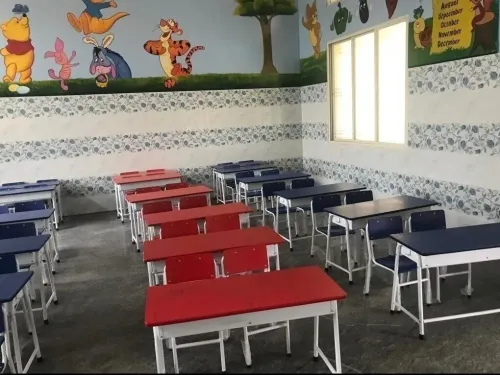
Classroom layout matters too. Even correctly sized furniture can become inconvenient when too many units are fitted into a limited area. Schools need adequate aisles for teachers and students while maintaining a clear view of the teaching area.
This becomes particularly important in Pune schools where room sizes, building layouts, student strength, and teaching formats can vary considerably. Before ordering furniture, measuring usable classroom dimensions can help determine an appropriate bench configuration and quantity.
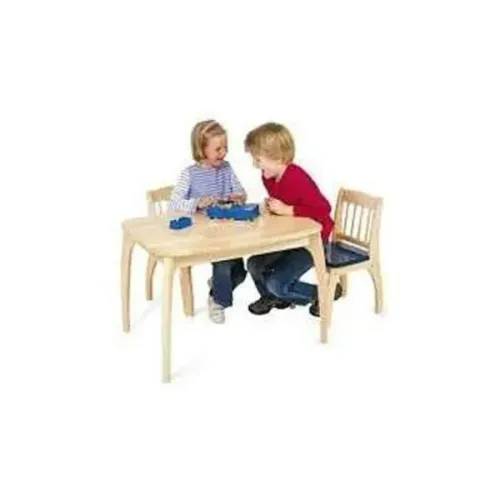
Furniture should also suit the activity taking place. Conventional desk-and-bench arrangements may work well in standard classrooms, while nursery rooms can benefit from lower tables and appropriately scaled seating. Study areas, libraries, laboratories, activity rooms, and collaborative learning spaces may require different configurations.
Another important factor is future usability. Schools should consider whether furniture will remain appropriate if room functions or class strengths change. Depending on the requirement, movable or modular units may provide more layout flexibility than fixed arrangements.
Kohinoor School Furniture serves educational furniture requirements in Pune, including classroom and related institutional furniture. Schools discussing ergonomic requirements with a supplier should provide grade levels, room measurements, typical class strength, and any specific storage or layout needs.
Ergonomic planning does not require complicated specifications. It begins with matching furniture dimensions and functions to real users. When schools consider student age, available space, classroom activities, movement, and maintenance together, furniture becomes a practical part of the learning environment rather than simply equipment placed inside a room.