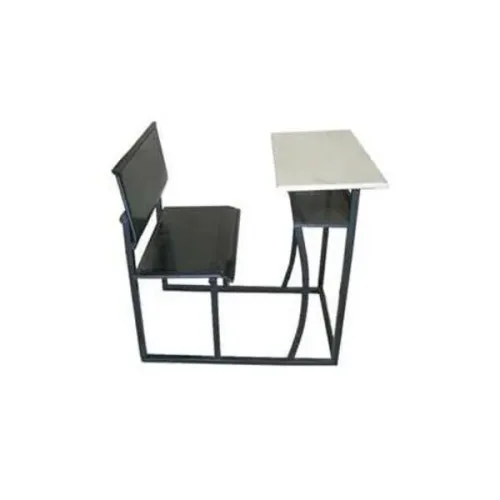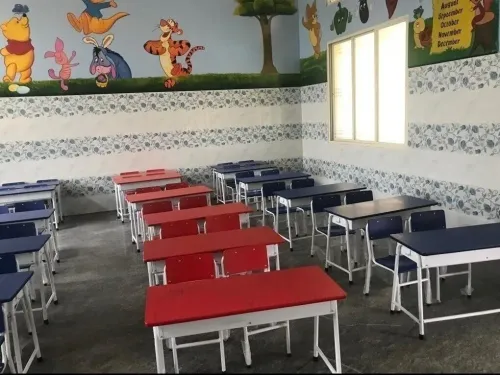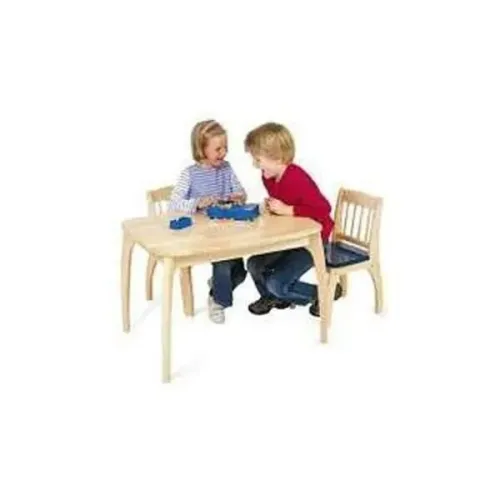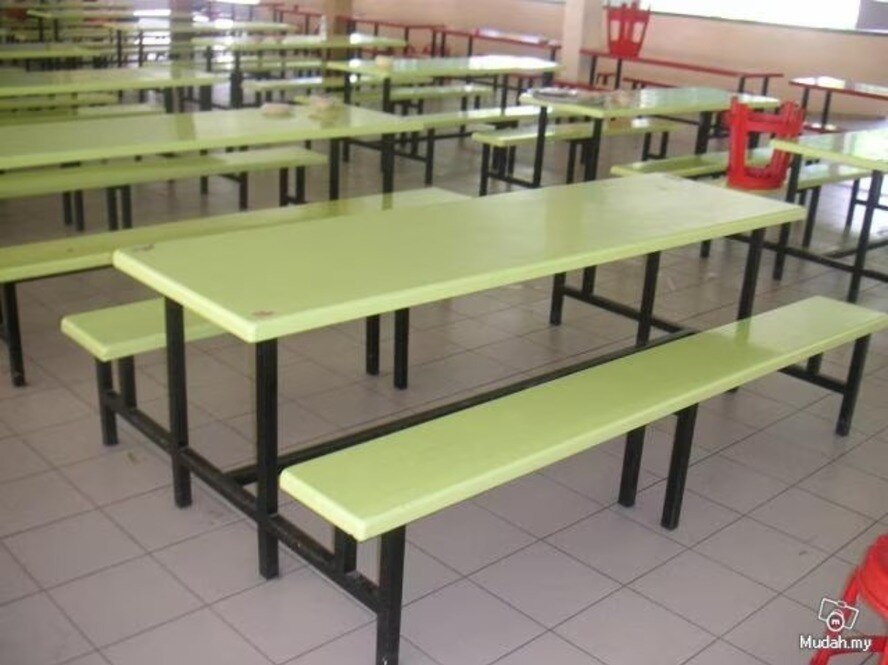
The choice is not simply steel against wood: an MS school bench may combine a steel frame with plywood, laminate-faced board or solid timber, while a wooden bench can vary widely in timber, joints and protective finish. By the end, you will be able to match construction, maintenance, classroom conditions and five-year cost to the right option, then challenge a supplier’s durability claims with a practical inspection checklist.
Key takeaways
- Compare the frame, panels, joints and finish—not just the furniture material.
- Choose MS frames for impact and moisture exposure; choose wood for warmth and quieter rooms.
- Inspect welds, edge bands, fasteners, stability and panel damage on a sample.
- Calculate repairs, replacements, cleaning and delivery costs across five years.
What are you actually comparing: an MS frame or a wooden bench?
An MS school bench normally means a mild-steel tubular frame with a separate seat and writing surface, not a bench made entirely from steel. The frame may carry plywood, laminated board, MDF, particleboard, solid-wood or plastic panels.
| Option | Construction | Main service-life variables |
|---|---|---|
| Steel-frame furniture | Tubular MS frame with separate panels | Tube joints, panel thickness, edge sealing, coating and replaceability |
| Wooden school benches | Bench made mainly from timber, with wood joints and timber panels | Timber moisture response, joint design, screw retention, finish and local repairability |
“Wooden” describes construction, not appearance. A solid-wood bench has different risks from one using low-cost MDF or laminated particleboard; water entering an unsealed edge, screw hole or damaged laminate can cause swelling, delamination and pulled-out fasteners.
A thin plywood panel can fail sooner than a thicker, well-sealed one, while a strong frame does not rescue a weak desktop.
- Ask for the board type: solid wood, plywood, MDF, particleboard or laminated board.
- Record the panel thickness, laminate or paint finish, and the edge-sealing method.
- Check whether the seat and desktop are bolted, screwed or permanently fixed.
- Confirm whether damaged panels, fasteners and floor glides can be replaced without discarding the frame.
- Examine joint design, welds and fastener access rather than accepting “MS” or “wood” as a quality grade.
One product cannot be rated from either label alone. Compare the complete construction, because panel quality, joints, fasteners and replaceability can influence service life as much as the frame material.
Which material handles daily impact, moisture and maintenance better?
An MS versus wooden school furniture comparison usually favours an MS frame for dragging, side impacts and rough handling. Low-cost wood or particleboard frames can split, loosen or pull screws sooner, but mild steel rusts where coating is scratched, at cut ends, welds, tube interiors and wet floor-contact points.
Powder coating is corrosion protection, not a guarantee. Surface preparation, complete coverage and film damage decide its life. Timber can swell, shrink, split, loosen at joints and attract termites; solid wood behaves differently from MDF, particleboard and plywood.
| Material | Failure or benefit |
|---|---|
| MS frame | Impact-tolerant, but local rust can spread from damaged coating |
| Solid wood | Repairable and warm, but vulnerable to moisture, joints, splitting and termites |
| MDF or particleboard | Swells quickly at unsealed edges, laminate damage and screw holes |
| Plywood | More stable than many fibreboards, but delamination follows prolonged water exposure |
After Pune monsoon cleaning, inspect for rust blooms, exposed welds, chipped paint, swollen edges, bubbling laminate, delamination and pulled-out screws. Replaceable panels and serviceable fasteners reduce classroom downtime; repairing a damaged MS frame can require welding, grinding and refinishing.
Steel can sound louder against tile floors and feel colder than wood. Include those trade-offs in your school furniture comparison in Pune, not only strength. A stable frame with replaceable panels is easier to maintain, but check floor glides and tightenable fasteners before accepting the sample.
When is each option the better fit for an active classroom?
Choose steel-frame construction for classrooms with frequent rearrangement, rough handling, high daily occupancy or damp cleaning routines. An MS school bench is the stronger fit when its coating, welds and panel edges are protected; otherwise scratches, exposed welds and wet tube ends become corrosion points.
| Option | Better fit | Main trade-off |
|---|---|---|
| Steel frame with panels | Daily dragging, crowded rooms, rough handling, damp mopping | All-metal contact points can amplify scraping and noise |
| Wooden school benches | Low-noise rooms, warmer visual design, quieter movement | Water at an unsealed edge can swell, split or loosen the panel |
| Predominantly timber furniture | Rooms where surface feel matters more than maximum impact resistance | Changing moisture can cause movement at joints and finishes |
Choose wooden school benches for a quieter room and a less cold-feeling surface. They are not waterproof: water reaching an unsealed underside or edge can cause failure even when the visible top remains intact.
Match either option to the pupil age group, not to a universal bench size. Specify:
- Seat height and seat depth
- Desk height and clear leg space beneath it
- The vertical and horizontal relationship between the seat and writing surface
- Floor type, including whether glides will catch, slip or mark it
- Storage needs, cleaning method and whether staff move units every day
A stable, durable bench in the wrong dimensions still restricts leg movement and encourages poor posture. Choose steel when handling and moisture dominate; choose wood when quiet movement, warmer touch and visual character carry greater weight.
What should you inspect on a sample before placing a school order?
Before approving an order, inspect a working sample, not a brochure. This turns MS versus wooden school furniture into observable evidence and exposes failures that “heavy duty” hides.
1. For an MS school bench, ask the durable school furniture supplier to state the tube outside dimensions, wall thickness or gauge, steel grade where relevant, cross-bracing, weld continuity, burr removal, corner radii, corrosion-protection process and coating requirements in writing.
Check for weld spatter, sharp projections, cracked joints, exposed cut ends, a narrow footprint, rocking and uneven legs.
2. Identify every wooden component as solid wood, plywood, MDF or particleboard. Inspect underside edges, edge banding, screw holes, laminate seams, swelling and delamination; water entering an unsealed edge can pull out fasteners. Tighten-test the fasteners, confirm that panels are replaceable, and check that floor glides protect the floor.
3. Shift your weight across the seat and writing surface, then apply a permitted load or deflection test instead of accepting “heavy duty.” The unit must remain stable under shifting loads without joint movement or excessive flex.
4. If the order is large, inspect a production-representative sample before approval and compare its dimensions, finish and joints with the approved sample. Include adjustable levelling feet only when their locking method and corrosion protection are clear; otherwise they add loose parts and failure points.
Record defects with photographs and obtain corrections in writing before signing the purchase order.
How should you compare five-year cost and choose a supplier in Pune?
A five-year school furniture comparison in Pune should price delivery, assembly, periodic tightening, touch-up or repainting, replacement parts, disposal and classroom downtime—not only the purchase price. A cheap unit with non-replaceable boards or weak corrosion protection can cost more after damaged panels, rust and lost teaching time.
| Cost item | MS-framed bench | Mainly wooden bench |
|---|---|---|
| Delivery and assembly | Include access, floor protection and installation | Include careful handling and joint assembly |
| Routine maintenance | Tighten fasteners; touch up scratched coating | Tighten joints; reseal or refinish exposed edges |
| Parts and repairs | Price seats, desktops, glides, fasteners and welding | Price panels, joints, screws and refinishing |
| End-of-life cost | Separate metal disposal from board disposal | Account for heavier mixed-material disposal |
| Downtime | Count removal, repair and classroom reassignment | Count panel replacement and drying time |
Ask each durable school furniture supplier for:
- A repeatable specification, dimensional drawing, material and finish description, sample-inspection process, load or stability-test evidence, spare-part availability and warranty exclusions.
- For an MS school bench, tube dimensions, wall thickness, steel grade, weld continuity, burr removal, corner radii, corrosion treatment and coating requirements.
- Separate prices for replacement seats, desktops, glides and refinishing.
A buyer considering customized school furniture in Pune, including Kohinoor School Furniture, can use these written-specification and sample-verification questions before comparing an MS school bench with wooden school benches. Choose the construction that matches handling, moisture, noise and repair conditions—not the material label alone.
Related products
 | Being one of the leading manufacturers and suppliers of this commendable range of School Wooden Desk, we work hard to maintain its quality. View product → |
 | Color Pink and White Material Wooden and MS Size Customized Design Type Customized We are offering School Class Wooden Furniture to our clients. View product → |
Frequently asked questions
What does an MS school bench actually include?
An MS school bench usually has a mild-steel tubular frame with separate seat and writing panels. Those panels can use plywood, laminated board, MDF, particleboard, solid wood or plastic.
Which handles classroom impact and moisture better: MS or wood?
MS frames handle repeated knocks and moisture better when the steel has sound welds and a durable painted or powder-coated finish. Wooden panels need sealed edges and prompt repairs after swelling, splitting or chipped laminate.
When is each option the better fit for an active classroom?
Choose MS-framed furniture for high-use classrooms, damp cleaning conditions and frequent rearrangement. Choose wooden school benches when appearance, warmth, lower noise and a traditional classroom feel matter more.
What should you inspect before ordering school furniture?
Check frame stability, weld quality, tube joints, sharp edges, finish coverage, panel thickness, edge sealing, fasteners, writing-surface alignment and floor contact on a full-size sample.
How should you compare five-year cost and suppliers in Pune?
Add purchase, delivery, installation, cleaning, repairs, replacement panels and disposal costs over five years. Ask each supplier for specifications, warranty terms, lead time, customization limits and references for comparable institutional orders.
Related products
 | Color Blue Design Type Customized Material Wooden, MS We are offering Wooden School Furniture to our clients. View product → |
 | Size Customized Color Brown and Cream Design Type Customized Material MS We are offering MS School Bench to our clients. View product → |
 | Providing you the best range of MS Single Desk Bench, SS Single Desk and Student Single Desk Bench with effective & timely delivery. View product → |