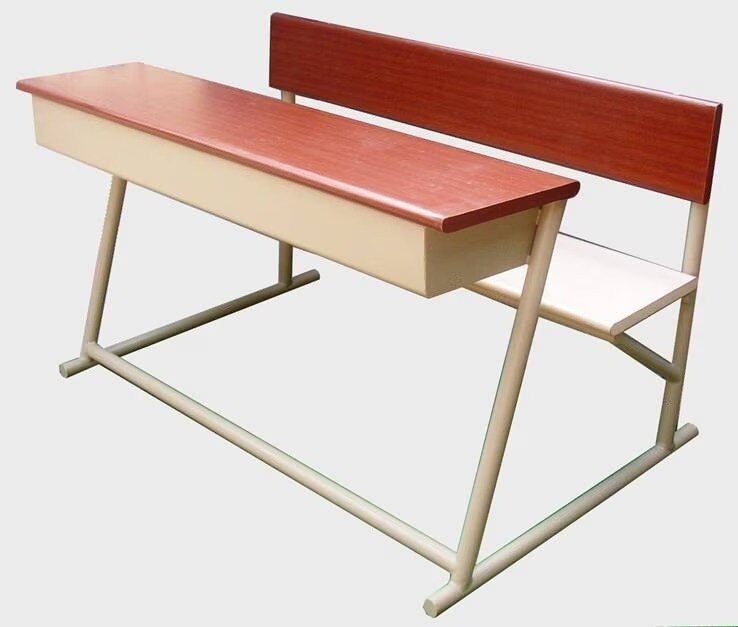
A single student seat is not always a chair sold by itself: suppliers may use the term for a chair-and-writing-surface set, an attached desk unit or a loose chair. By separating those configurations, checking dimensions against the room and pupil body size, and comparing construction and service terms, you can specify furniture that fits both the classroom and the budget.
Key takeaways
- Define whether you need chairs, separate desks, or attached units.
- Match seat and desk height to pupil size, not classroom age alone.
- Specify welded frames, replaceable glides and cleanable surfaces for daily use.
- Request identical specifications, quantities and delivery terms from every supplier.
What counts as a single sitter chair in a school purchase?
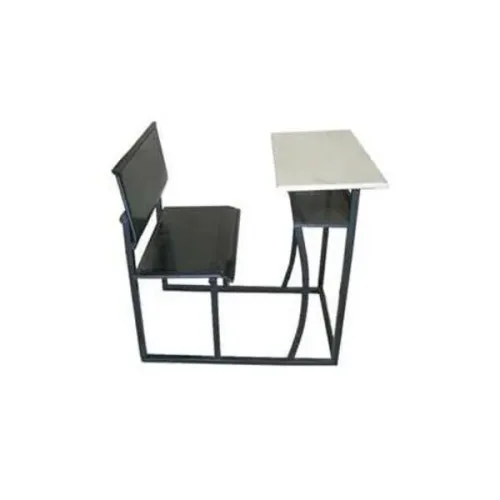
A single sitter chair school furniture package normally serves one pupil, but “chair” does not automatically mean a complete workstation. Define the required configuration before requesting prices: a loose chair alone, a chair with a separate writing desk, or an attached chair-and-desk unit.
| Option | What it includes | Key distinction |
|---|---|---|
| Single seat school chair | One chair | Seating component only |
| Chair and separate desk | Two movable units | Flexible layout, but more alignment and maintenance |
| Attached chair-and-desk unit | One combined frame | Faster movement, less layout flexibility |
| Single desk bench | One seat and writing surface | Serves one pupil |
| Two-seater bench | Shared seat and frame | Supports two pupils on one structure |
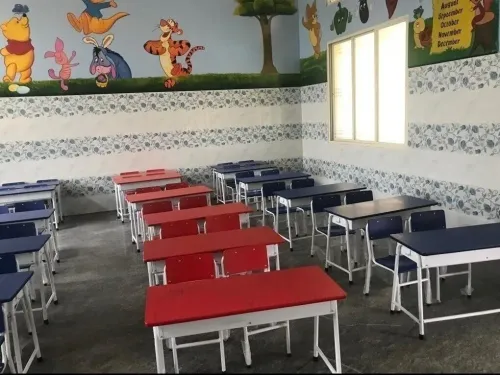
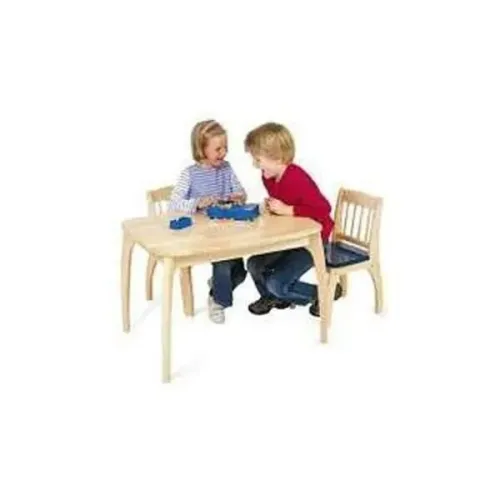
A chair with a separate writing desk gives you more freedom for testing, grouping and room changes, but creates two units to move, align, inspect and store. A two-seater bench is not a single sitter arrangement, even if one pupil occupies it.
If you are still deciding, ask every supplier to quote chair-only, desk-only and combined options separately. Put seat height, seat depth, backrest height, writing-surface height, overall width and overall depth on the request for quotation.
This prevents a low chair-only price being compared with a complete desk-and-chair price, and makes replacement ordering easier when one chair fails but the writing surface remains usable.
When does one seat per pupil improve the classroom?
One seat per pupil improves a classroom when each learner needs a defined workspace or the room must change layout quickly. Separate desks make individual testing easier: copying is harder, and invigilators can control spacing without rearranging a shared bench.
| Option | Main advantage | Main limitation |
|---|---|---|
| Single sitter chair for schools with separate desk | Flexible grouping and simple replacement | Two units to move, align and store |
| Attached single-seat unit | One pupil gets a fixed workstation | Less flexible when layouts change |
| Two-seater bench | Compact, high-density seating | One damaged side can disrupt two workstations |
Loose units suit mixed-ability groups, temporary intervention groups, computer rooms and narrow classrooms where fixed paired furniture blocks movement. Remove one damaged unit without taking another pupil’s workstation out of service.
The cost is floor area. Two individual units can occupy more space than one shared bench, while staff have more chairs and desks to move, inspect and store.
Choose shared tables, two-seater benches or nesting tables when lessons depend on permanent group work, storage is scarce, the room needs maximum density or furniture moves several times daily. These options reduce handling and storage demands.
Test teaching and storage layouts with real units before ordering. Catalogue footprints miss the gaps created by chair legs, bags and tablet arms; also check teacher circulation and emergency-exit routes.
How do you match the chair, desk and room to pupil size?
Specify the chair, desk and room by pupil height range and body measurements, not by grade label alone. ISO 5970 treats educational chairs and tables as coordinated functional sizes, so approve the seat and writing surface together.
On the sample, check:
- Seat height and depth: feet must rest securely on the floor, while thighs receive support without pressure behind the knees.
- Back-support position: the backrest must contact the back without pushing the shoulders forward.
- Desk height: knees need clear space beneath the writing surface, with no contact when the pupil sits upright.
- Overall width and depth: use these dimensions to draw the room, not catalogue labels alone.
- Layout clearances: preserve the required aisle, teacher circulation route, door opening and storage access.
- Safety access: check the distance to emergency exits and provide a wheelchair-accessible approach to designated workstations.
- Inclusive provision: specify accessible-height units with clear knee and foot space instead of assuming the standard count serves every learner.
If one size cannot cover the school population, specify several size bands or an adjustable unit. State the intended user-height range for each band; a low-priced single size can create poor posture, unused replacements and later refitting.
Count units only after placing their actual footprints on the plan. Include accessible workstations separately from the standard chair count, because a nominal capacity figure does not prove that every learner can approach, use and leave the workstation safely.
Which materials and frame details survive daily school use?
Choose the frame and surface for the room’s cleaning routine, moisture exposure, noise level and repair capacity—not for appearance alone.
| Material | Strengths | Failure risks and best use |
|---|---|---|
| Wood or board | Warm, quiet and comfortable | Seal every exposed edge; swelling starts at unprotected cuts, screw holes and joints. Use it in dry rooms with controlled cleaning. |
| Mild steel | Economical, repairable and strong | Scratches, weld zones and open tube ends rust. Require rust protection and inspect damage after delivery. |
| Stainless steel | Strong corrosion resistance in damp rooms | Costs more and transmits chair noise unless feet and contact points are controlled. |
| Plastic | Light, washable and easy to move | Check resistance to cracking, heat and repeated impact before approving it for heavy daily use. |
| Combination construction | Balances weight, strength and comfort | More joints mean more screws, brackets and connections to inspect and tighten. |
For mild-steel and stainless-steel frames, put tube thickness, metal grade, coating or finish, fastener type and permissible dimensional tolerances in the specification. “Heavy duty” is not a measurement.
Inspect the sample for continuous, smooth welds without cracks, sharp spatter or unfinished edges. Check capped tube ends, rounded corners, tight fasteners, rust protection, non-marking floor glides and stable contact at all four legs.
Request evidence of front and rear tipping, lateral stability, repeated loading, fastener loosening, weld cracking, sharp-edge, pinch-point and floor-contact checks. A static load figure cannot reveal these failures. For damp storage or monsoon delivery, require sealed board edges, protected joints and packaging that keeps moisture away from the frame and surface.
What should you put in a comparable buying brief?
Put every requirement in one comparable brief: quantity by pupil-size band, chair-only or chair-and-desk configuration, material and thickness, tube and board specifications, dimensions, colour, tolerances, delivery address, installation responsibility, warranty and acceptance tests.
| Configuration | Quote separately | Check before approval |
|---|---|---|
| Chair only | Seat and backrest unit | Replacement need and storage footprint |
| Separate chair and desk | Two movable units | Alignment, aisle clearance and handling |
| Attached chair-and-desk | One combined workstation | Tablet-arm access, repair points and stability |
For a school furniture supplier in Pune, request separate prices for the unit, freight, unloading, floor-by-floor movement, assembly, packaging removal, GST treatment and transit-damage replacement.
If you plan to buy school furniture in Pune, also ask for sample availability, local measurement support, installation labour, spare-part stock and the documented process for replacing a small number of failed units after handover.
Approve a physical sample before bulk manufacture or dispatch. Measure it, test stability on the intended floor, check door and aisle fit, and record the approved material, colour, weld finish, edge treatment and hardware.
Include stackability only after the supplier states maximum safe stack height, storage footprint and handling method; stacked units can damage frames, edges or tablet arms.
- Identify replaceable feet, glides, screws, caps, hinges and tablet-arm brackets.
- Record availability period, response time and repair method.
- Confirm whether school staff can repair each part without welding or specialist tools.
Kohinoor School Furniture belongs in the comparison only when its quotation supplies these operational details rather than relying on catalogue descriptions.
Frequently asked questions
What counts as a single sitter chair in a school purchase?
It is a chair intended for one pupil, but confirm whether your quote covers the chair alone, a separate writing desk, or an attached chair-and-desk unit.
When does one seat per pupil improve the classroom?
One seat per pupil improves assigned workspace, movement control and desk spacing when the room layout supports clear aisles and adequate teacher access.
How do you match the chair, desk and room to pupil size?
Measure pupil requirements against seat height, seat depth, desk height, legroom and aisle clearance rather than choosing one size for every class.
Which materials and frame details survive daily school use?
Compare frame joints, steel tube thickness, corrosion protection, seat and back materials, edge finishing, floor glides and access to replacement parts.
What should you put in a comparable buying brief?
State the chair and desk type, dimensions, materials, finish, quantity, room constraints, delivery location, warranty terms and installation requirements.