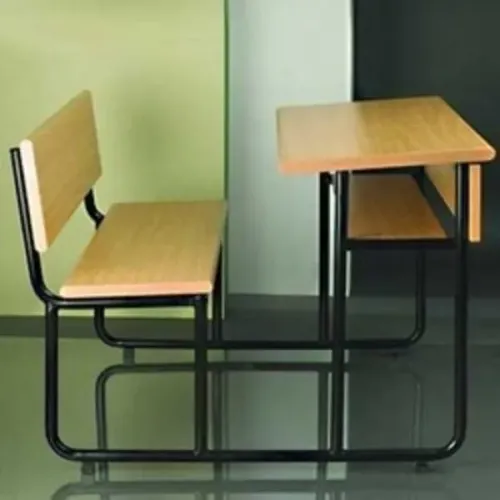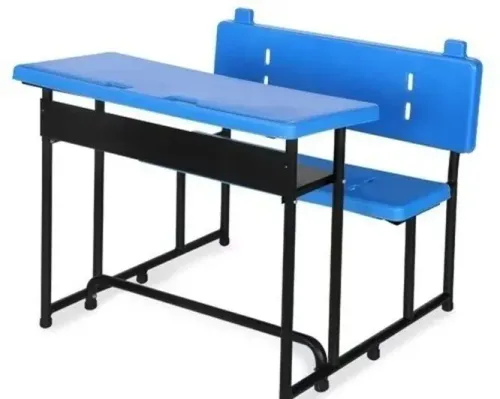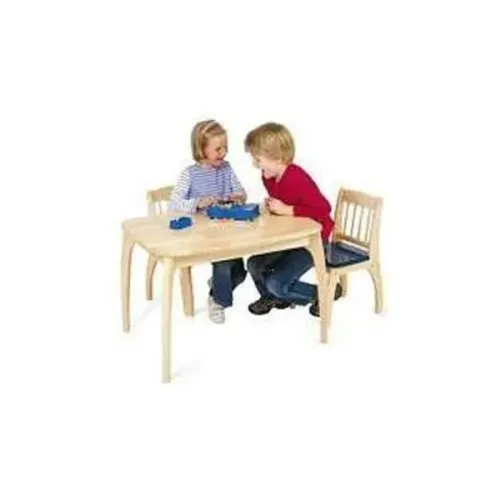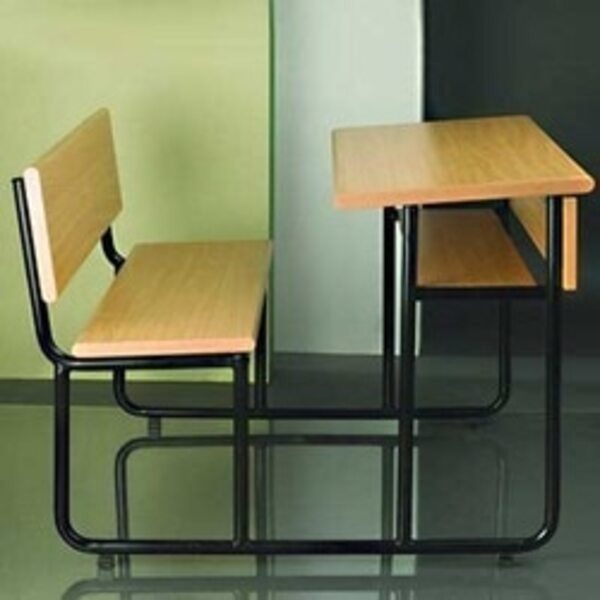
A shared bench works when pupils need to discuss, handle materials together or follow teacher-directed work from one continuous surface. An individual study table works better when each learner needs personal space, storage, device control or exam-level separation. By the end, you can match the furniture to the students, lesson format, room and seating duration.
Key takeaways
- Choose benches for shared work, discussion and teacher-directed activities.
- Use study tables for individual focus, storage and adjustable seating needs.
- Measure seat width, desk height, aisle space and storage before ordering.
- Select benches only when the room supports safe movement and shared seating.
Choose the Furniture Around the Lesson, Not the Student’s Age
Choose a classroom bench instead of a study table when two or more students need one continuous work surface for discussion, practical work or teacher-directed tasks.
The lesson format matters more than age: a classroom bench for older students is appropriate when it is sized for adolescent or adult bodies, not treated as a child-sized product.
| Decision factor | Classroom bench | Individual study table |
|---|---|---|
| Writing and materials | Shared surface supports paired work, but one student’s books or handwriting can disturb another | Defined personal area protects concentration and materials |
| Collaboration | Keeps partners together for discussion and projects | Requires moving tables or turning chairs |
| Storage | Needs shared under-seat space, hooks or baskets | Easier to provide personal storage |
| Devices | Continuous cable routing can help, but one tangled lead affects several users | Separate power and cable arrangements limit interference |
| Assessment | Works only when lightweight and easy to separate | Better default for independent tests and changing layouts |
A school bench or study table should also reflect lesson duration. Long silent writing, individual assignments and frequent examinations favour separate tables. Paired learning, laboratories, workshops and project rooms favour benches, provided the room leaves enough clearance to enter, exit and reconfigure seats.
For a mixed-use classroom, choose movable benches with clear personal width, durable edges and a defined bag location. If students need quiet boundaries or manage laptops, books and instruments independently, the study table is the safer choice.
Which Students and Activities Suit Shared Seating?
A classroom bench for older students works when the lesson expects two learners to share one continuous work surface. Secondary-school discussion, supervised practice, group projects and teacher-led exercises suit paired seating; specify adolescent or adult dimensions, not a smaller primary-school model.
| Setting or activity | Shared bench fit | Choose individual tables when |
|---|---|---|
| Primary and middle school | Good for paired writing, reading and guided tasks when students are similar in height | Children need frequent movement, personal materials or different furniture sizes |
| Secondary school | Good for discussion, practical work and dense classroom layouts with clear knee space for two users | Each pupil needs independent storage, devices or a fixed personal work area |
| College tutorials or practical classes | Good for collaborative coursework, seminars and shared equipment | Students need extended individual writing, laptop privacy or flexible seating |
| Examinations | Suitable when the approved layout allows shared frames and each candidate has enough writing space without contact | The exam requires strict separation, individual spacing or accommodation equipment |
Examination use depends on the assessment rules, not simply the room capacity. A bench fails student bench suitability when a central support blocks a leg, a wheelchair cannot approach, or one student’s laptop, bag or cable occupies another’s space. Individual tables provide safer placement for mobility aids, markedly different body sizes and assistive equipment.
For device-heavy rooms, check power access, cable routing, screen privacy and spill control before choosing a continuous surface.
Compare Space, Posture, Storage and Sharing Capacity
Choose a classroom bench when two or more students need one continuous surface for discussion, shared materials or teacher-directed work. Choose a study table when each student needs independent writing space, personal storage or frequent changes in seating arrangement.
| Feature | School bench | Study table |
|---|---|---|
| Writing space | Shared width; frame intrusions can reduce usable space for books, laptops and elbows. | Each student gets a defined work area, with fewer conflicts over materials. |
| Personal storage | Usually needs an under-seat shelf, hook or separate bag area; otherwise bags occupy walkways. | Drawers, shelves or separate compartments are easier to assign to one student. |
| Posture | Students share the same alignment, but neighbouring elbows and limited movement can restrict individual positioning. | A correctly matched chair and table allow more independent posture changes. |
| Collaboration | Strong choice for paired discussion, practical tasks and group supervision. | Better for quiet work, individual feedback and activities requiring separation. |
| Classroom density | Fewer units and gaps can save floor space, but allow for chair pull-back, access, bags and cleaning. | More gaps increase the footprint but make movement and rearrangement easier. |
| Sharing capacity | Specify the intended number of users and usable width per student; two users is not suitable if either lacks writing room. | Normally supports one student per table, unless the design explicitly allows shared seating. |
Student bench suitability depends on student height, body size, lesson format and seating duration, not age alone. A secondary-school or college bench must match the correct size, including the applicable EN 1729 size mark, rather than use a smaller child’s model.
For examinations, quiet independent writing or computer-based assessment, select a study table unless the bench provides sufficient separation through width, spacing or desk screens.
Measure the Bench Before You Order It
Measure the seat height, seat depth, work-surface height, user space and room clearances before ordering; a bench that fits the floor plan can still force poor posture.
For a classroom bench instead of study table, calculate usable length per student, not total length alone. Allow enough elbow and writing space for the activity, then check the bench depth against knee clearance, bag storage and the distance between rows.
A classroom bench for older students must match adolescent or adult body dimensions, not a smaller child size.
| Dimension or detail | What to check | What goes wrong if it is wrong |
|---|---|---|
| Seat height and table height | Match the bench and work surface using EN 1729-1 size marks where applicable | Feet dangle, knees hit the underside or shoulders rise while writing |
| Seat depth and backrest | Support the thighs without pressing behind the knees; specify a backrest if students sit for long lessons | Students perch forward, slump or lose back support |
| Bench length | Divide usable length by the number of users and include side clearances | Elbows, books and devices compete for the same space |
| Room footprint | Measure row spacing, aisle width, door swing and teacher access | The bench fits on paper but blocks movement or evacuation routes |
| Construction | Choose rounded, sealed edges, a rigid frame, cleanable surfaces and protected cable routes | Sharp edges, wobble, spills or shared cables disrupt lessons |
For device-heavy rooms, specify power access, cable separation and spill containment. A continuous bench simplifies routing but lets one loose cable or oversized device interfere with everyone beside it.
Use Benches as Alternatives Only Where the Room Supports Them
Benches are useful study table alternatives for schools when the room is organised for paired work, project learning, laboratory tasks, workshops or frequent group reconfiguration. They increase seating density and make collaboration easier, but only when each pupil still has enough personal writing width and a clear route to sit, stand and leave.
They are the wrong choice for formal examinations, quiet independent writing and computer-based assessment where neighbours’ elbows, books or screens create interference. A classroom bench for older students can suit secondary school or college teaching, but it must match adolescent or adult body size; age alone does not establish student bench suitability.
Use lightweight, movable benches only when the room must change repeatedly between group and individual layouts.
Put these points into the purchase specification:
- Pupil age and height range, EN 1729 size mark where applicable, and the number of users per bench.
- Usable work-surface width per pupil after legs and frame intrusions, including space for books, laptops and writing materials.
- Compatible seat and table heights, backrest requirement, seat depth and the expected sitting duration.
- Minimum aisle and mobility clearances, examination-layout requirement and reconfiguration method.
- Bag storage, cable routing, power access, screen privacy and spill containment for device-heavy rooms.
- Rounded, cleanable edges; a durable frame; and finishes that withstand daily cleaning.
Kohinoor School Furniture can help turn these measurements into a bench drawing rather than leaving the decision to a catalogue label.
Related products
 | Providing you the best range of MS Single Desk Bench, SS Single Desk and Student Single Desk Bench with effective & timely delivery. View product → |
 | Being one of the leading manufacturers and suppliers of this commendable range of School Wooden Desk, we work hard to maintain its quality. View product → |
Frequently asked questions
Who should use a classroom bench instead of a study table?
Use a classroom bench when two or more students need one continuous work surface for discussion, practical work or teacher-directed tasks.
Which students and activities suit shared classroom seating?
Shared seating suits students working in pairs or groups, including discussion, practical tasks and lessons that require frequent collaboration.
How does a classroom bench compare with a study table?
A bench provides shared capacity and efficient use of floor space, while a study table better supports individual focus, personal storage and separate working positions.
What should you measure before ordering a classroom bench?
Measure the bench length and seat width, desk height, classroom aisles, access routes and available storage space before ordering.
Related products
 | Pioneers in the industry, we offer Nursery Class School Furniture Set, Pre-Primary School Furniture Set, Nursery Classroom Furniture, School Class... View product → |
 | Product Details: Size Customized Color Cream Design Type Customized Material Wooden Weight 5-6 kg We are offering Pre-Primary School Furniture Set to... View product → |
 | Size Customized Color Brown and Cream Design Type Customized Material MS We are offering MS School Bench to our clients. View product → |
 | Size Customized Color Yellow Design Type Customized Height 2 Feet We are offering School Nursery Bench to our clients. View product → |