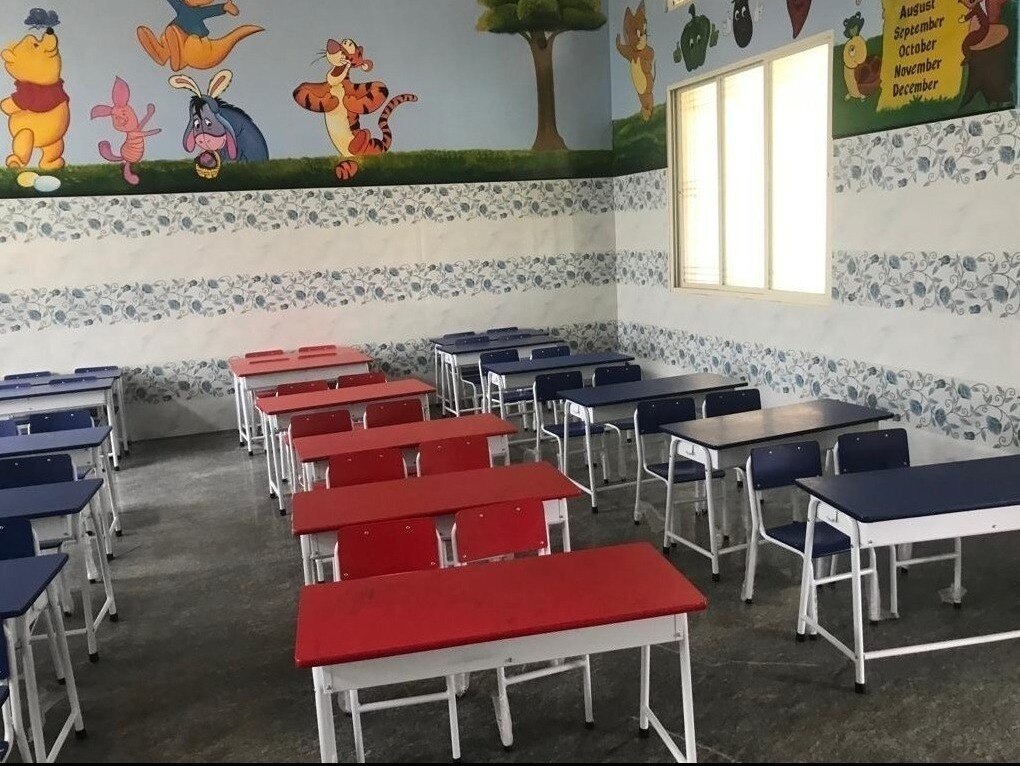
A nursery room cannot be fitted safely by choosing a generic junior size or matching furniture to a catalogue photograph. Measure the children, test the layout, inspect construction and finishes, then compare quotations against delivery, maintenance and replacement needs. By the end, you will have a practical specification for ordering furniture that fits children and works through Pune’s wet-cleaning and monsoon conditions.
Key takeaways
- Measure the smallest and tallest children before selecting furniture sizes.
- Choose tables by activity, group size and available classroom circulation space.
- Reject samples with sharp edges, wobble, water damage or hard-to-clean joints.
- Compare quotations by specifications, warranty, delivery and installation—not price alone.
Start with the children’s measurements, not a generic size label
Measure children before ordering nursery school furniture for institutions Pune: sample the actual age range, including the smallest and tallest children.
With each child seated upright, measure popliteal height from the floor to the underside of the knee; elbow height from the seat surface to the underside of the relaxed elbow; hip width across the widest point of the hips; and seated knee clearance from the back of the buttocks to the front of the knee, allowing room to move under the table.
- Record each child’s measurements and compare the spread, not only the average. Chair overall height is the distance from floor to the highest back point; it is not seat height. Specify seat height, seat depth, seat width, backrest height, table height and under-table clearance as separate dimensions.
- Use EN 1729-1 size bands as a comparison point: approximately 210 mm seat height with a 400 mm table, 260 with 460, 310 with 530, and 350 with 590. Confirm the fit against your measurements rather than accepting “junior” or “nursery” labels.
- Approve a size only when the child passes every check:
- Both feet are supported.
- Knees sit near 90 degrees and thighs remain level.
- The back is supported.
- Elbows rest without raised shoulders.
- The chair pulls fully under the table without knees hitting the underside.
Order separate size quantities when one class contains a meaningful height spread; one universal set will leave some children unsupported or cramped.
Match table forms and room layouts to each nursery activity
Choose the layout by activity, not by a matching furniture set.
| Arrangement | Flexibility | Supervision | Storage and cleaning | Best use |
|---|---|---|---|---|
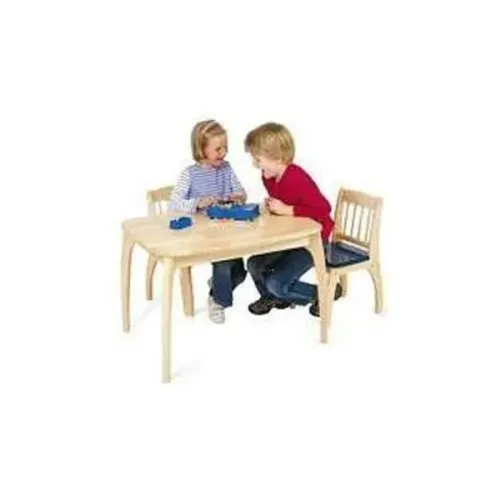
| Two-child tables | Easy to move and regroup | Clear view of two children | Moderate storage; simple to wipe | Drawing, craft and meals |
| Group tables | Stable shared work area; slower to reconfigure | Good whole-group oversight | More floor area to clean | Sensory play, meals and collaborative craft |
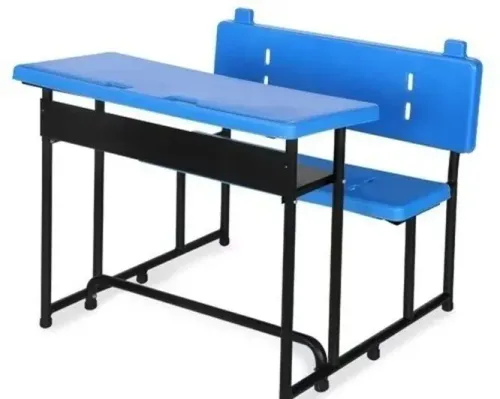
| Individual desks | Highest task separation; easy to rearrange | Strong individual monitoring | More pieces to store and clean | Teacher-led instruction |
| Floor-seating zones | Very flexible; requires defined boundaries | Excellent access during play | Washable mats and nearby low storage needed | Story time and sensory play |
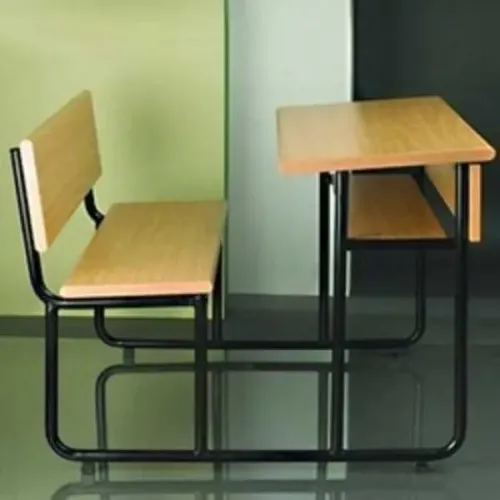
| Fixed benches | Least flexible; fixed position | Good along a wall, poor behind rows | Few parts to store; difficult to clean underneath | Short meals or permanent reading areas |
Divide the class size by the tested number of seats per table, round up, then add chairs by measured size. Do not buy one universal set: a mixed-height class may need separate quantities matched to each child’s measurements.
Map teacher circulation, doorways, storage access and evacuation routes on the floor before ordering. Leave a clear route between activity stations and enough space for an adult to reach a child without moving several chairs.
Ask whether each item is stackable, foldable, lightweight, movable or designed for rapid reconfiguration. Require a demonstration; a catalogue statement does not prove that a teacher can safely reset the room.
For a brief to buy nursery school furniture Pune institutions can use, record the room dimensions, floor type, activity zones and storage position before requesting prices.
Inspect safety, stability and cleanability before approving a sample
A sample earns approval only after it passes a hands-on safety and cleaning inspection, not because its photograph looks suitable. Use EN 1729-2 as the checklist for stability, strength, durability, edges, corners, moving parts and entrapment risks.
1. Ask for rounded, continuously finished edges, captive hardware and closed tube ends. Run your fingers beneath the seat and tabletop; reject exposed staples, screw tips, splintered wood and cracked plastic.
2. Test each chair for rear-leg lift, rocking and sideways leaning. Check that non-slip feet stay in contact with the floor during normal movement.
3. Inspect gaps, hinges, folding parts and openings for finger or limb entrapment. Operate every moving part repeatedly, including locks and adjustable fittings.
4. Require a documented stability or loading test with the report identifying the tested model, load, method and result. An adult-chair load rating does not prove resistance to nursery misuse.
5. Conduct a supervised misuse review: drag a chair, kneel on it, lean sideways and strike a table edge with controlled force. Reject samples that tip, loosen, splinter or expose hardware.
6. Specify non-porous worktops, sealed joints and no fabric crevices on routine-use seating. Apply the school’s detergent or disinfectant, then check for dulling, softening, colour transfer and metal corrosion.
7. Include low open storage, cubbies, book display and washable activity surfaces in the room plan. Anchor climbable storage and keep every unit clear of evacuation paths.
Specify materials that survive Pune moisture, cleaning and repairs
Specify every part in a material schedule; “wood” is not a specification. Ask whether it is solid wood, plywood, MDF or particleboard, then record board grade, thickness, face and edge construction, adhesive, and coating or laminate system.
| Part | Specify | Reject or repair concern |
|---|---|---|
| Panels | Sealed plywood or MDF edges; documented grade | Untreated MDF or particleboard near sinks, wash areas or wet-mopped floors |
| Feet | Plastic or metal protection against standing water | Bare board ends and absorbent feet |
| Replaceable parts | Glides, seat shells, panels and standard hardware | One-piece mouldings that require complete replacement |
Require a written warranty covering swelling, delamination and fungal deterioration. Sealed faces do not protect an exposed cut edge, which can swell before the decorative surface shows damage.
For metal frames, request the stainless-steel grade, tube thickness, weld quality, fastener type and corrosion protection. Inspect the underside, welds and screw retention, not only the visible face.
Before production, request a signed drawing, finish board and physical first article. At delivery, measure a random sample against the drawing and check wobble on a flat floor.
- Test the approved sample with the school’s detergent or disinfectant; look for dulling, softening, colour transfer and metal corrosion.
- Drag a chair, kneel on it and apply supervised table-edge impact; record loosened hardware or failed joints.
- Keep the approved sample or signed finish board for batch acceptance, and confirm that replacement glides, shells, panels and hardware remain available.
Turn supplier quotations into a comparable institutional purchase
Write the procurement brief before requesting prices. State room length, width and height; child age range and measured size bands; seat and table quantities by size; table capacity; floor type; doorway and lift limits; cleaning chemicals; delivery deadline; installation responsibility; and storage requirements. Missing fields invite different seat sizes, panel thicknesses and freight assumptions.
Ask every bidder for:
- Signed drawings, material specifications, test reports, warranty exclusions, spare-hardware details and replacement-part availability.
- Written answers confirming stackability, foldability and reconfiguration, supported by a demonstration rather than a catalogue claim.
- The same signed dimensions and physical sample approval when comparing scholar nursery furniture Pune listings, a nursery classroom furniture supplier Pune quotation and a nursery furniture manufacturer Pune offer.
| Cost line | What to compare | Common hidden charge |
|---|---|---|
| Freight and access | Delivered to the room, including doorway and lift handling | Restricted access or extra carrying |
| Installation | Assembly, levelling, anchoring and waste removal | School staff assembly |
| Service | Damaged-panel replacement, spare hardware and warranty response time | Full-unit replacement |
| Ownership | Replaceable glides, shells and panels over the service period | Non-replaceable mouldings |
Retain the approved sample or signed finish board for batch acceptance. On arrival, record seat dimensions, table clearance, surface condition and hardware retention. Kohinoor School Furniture belongs in the comparison when it supplies that evidence and adapts the order to the measured room and children.
Related products
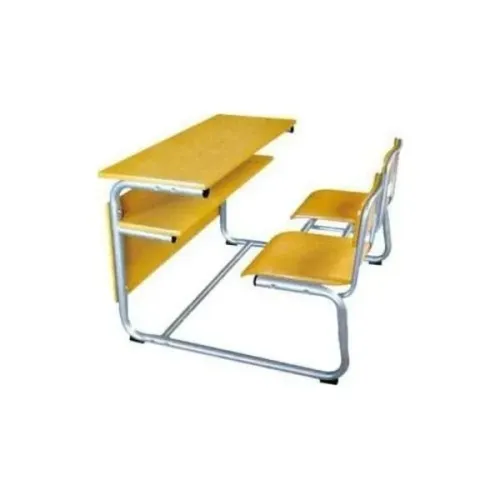
 | School Furniture Nursery Class School Furniture Set Size Customized Color Yellow Design Type Customized Material Wooden Chair 2 Table 1 We are offering Nursery Class School Furniture Set to our clients. View product → |
 | School Furniture Use Classroom Color Brown Size Customized Design Type Customized Material Wooden and SS We are offering Nursery Classroom Furniture to our clients. View product → |
Frequently asked questions
How should you choose nursery furniture sizes?
Measure the actual children using the room, including the smallest and tallest pupils, then compare seat height, table height, seat depth and foot support against those measurements.
Which table shape suits different nursery activities?
Use rectangular tables for structured group work, semicircular or curved tables for teacher-led activities, and modular tables when you need to reconfigure areas for play, art or meals.
What should you inspect before approving a nursery furniture sample?
Check for rounded edges, stable legs, secure joints, pinch points, tip resistance, smooth surfaces, washable finishes and gaps that trap dirt.
Which materials suit nursery furniture in Pune?
Specify moisture-resistant boards or solid materials, sealed edges, durable laminate or coating, corrosion-resistant hardware and replaceable components that withstand frequent cleaning and repairs.
How can institutions compare nursery furniture quotations?
Request identical specifications for dimensions, materials, hardware, quantities, delivery, installation, warranty, replacement parts and taxes, then compare the total supplied cost.
Related products
 | Size Customized Color Green and Brown Design Type Customized We are offering Scholar Nursery Furniture to our clients. View product → |
 | Size Customized Color Cream Design Type Customized Material Wooden Weight 5-6 kg We are offering Pre-Primary School Furniture Set to our clients. View product → |