A low quoted price does not reveal whether a college bench will survive daily shifting, monsoon moisture, abrasive cleaning or years of student use. By the end, you will know which MS construction details to specify, how to compare total ownership cost, how to inspect a delivery and when another furniture material or format is the better choice.
Key takeaways
- Specify protected joints, radiused edges and non-marking floor glides.
- Match furniture formats to classrooms, laboratories, libraries and examination halls.
- Compare lifecycle cost using durability, repairs, cleaning and replacement effort.
- Accept orders by checking dimensions, welds, finishes, stability and supplied documents.
What College Conditions Do to MS Furniture
On a college campus, MS educational furniture faces more than seated weight: frequent dragging, impacts, wet mops, dust and repeated cleaning. Its performance depends on protected joints and floor contact as much as steel strength. Smooth, radiused edges reduce injuries, while non-marking floor glides limit damage when desks shift between lectures or examinations.
Moisture creates the main long-term risk. Corrosion often begins at cut tube ends, weld zones, scratches, crevices, unsealed hollow sections and legs that remain wet against the floor. Coastal or humid campuses, wash areas and monsoon splash need stronger coating protection and closer inspection than dry, conditioned classrooms.
Termites do not attack steel, which gives it an advantage over untreated wood, but steel does not compensate for a failed coating.
For educational furniture for colleges, specify and inspect features that withstand daily handling:
- Continuous, clean welds without spatter, cracks or sharp projections
- Sealed tube ends and joints that do not trap mop water
- Smooth, cleanable surfaces that tolerate routine detergent wiping
- Seat, writing tablet and frame connections that stay tight after repeated movement
- Cross-bracing and floor glides that prevent rocking, scraping and impact damage
A catalogue label such as “heavy duty” proves little. Tube size, wall thickness, finish coverage and joint construction determine whether furniture remains stable after years of shifting, abrasion and high-use cleaning. Loose fasteners, chipped coating or a rocking leg are early warnings, not cosmetic defects.
The Construction Details That Decide Service Life
Service life starts with a checkable frame specification, not the phrase “heavy duty.” Record tube or angle-section dimensions, wall thickness, steel grade, weld quality, joint type, dimensional tolerances, and the required load or durability test. A heavier-looking frame can still fail if its legs lack reinforcement or its joints flex under repeated use.
| Detail | Long-term indicator | Warning sign |
|---|---|---|
| Frame | Consistent tube thickness, sound leg geometry, cross-bracing where needed, and supported seat or tablet load points | Oversized-looking tube with thin walls, unsupported spans, or a frame that twists |
| Joints | Continuous, clean welds with no cracks, pinholes, sharp projections, or visible undercut | Intermittent welds, rough grinding, loose bolts, or wobble after assembly |
| Finish | Degreasing, rust and mill-scale removal, chemical pretreatment, correct powder-cure temperature, and complete film coverage | Powder coating specified alone, bare weld zones, trapped rust, thin edges, or blistering |
| Replaceable parts | Separate seats, backs, writing tablets, glides, fasteners, and edge strips available by part number | One damaged tablet or glide requiring disposal of the complete unit |
A welded one-piece frame usually resists loosening better than a poorly assembled knock-down frame. Choose knock-down construction when corridors, storage, or relocation demand it, but require robust connectors, anti-loosening protection, and commercially replaceable hardware.
Before accepting MS educational furniture, inspect these failure points:
- Push each unit sideways and check for wobble.
- Examine every weld and underside for exposed metal or sharp edges.
- Check that floor glides sit evenly and can be replaced.
- Confirm the seat, back, and tablet do not flex under the specified load.
- Compare the production sample’s mass, dimensions, coating coverage, and hardware with the approved record.
Choosing the Right Format for Each College Room
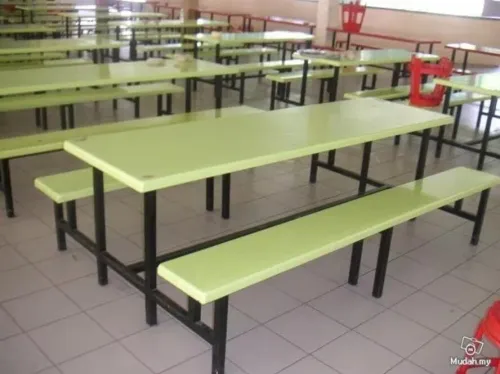
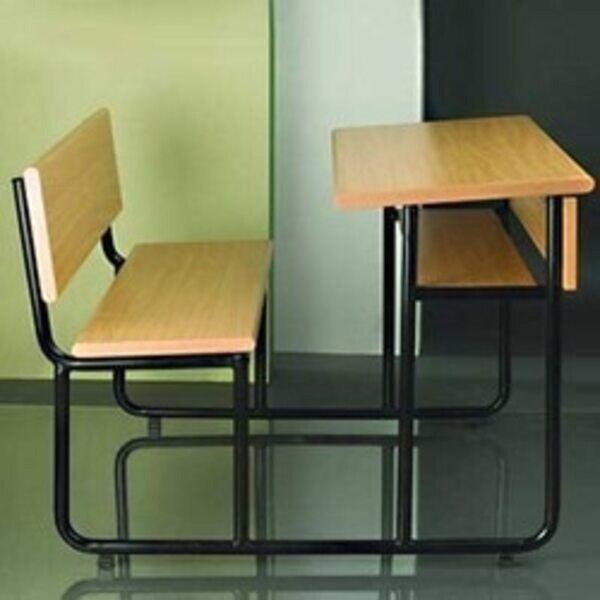
Choose fixed two-seater benches for dense lecture rooms, movable individual desks for examinations, and modular tables for laboratories or tutorials where layout changes matter. The right format in educational furniture for colleges depends on movement, supervision, equipment access and cleaning time—not only the number of seats.
| Format | Best use | Choose it when | Main trade-off |
|---|---|---|---|
| Fixed two-seater benches | Lectures and high-capacity teaching rooms | Rows will remain consistent and you want fewer loose parts, fast seating and strong floor stability | Poor access between students and slow room reconfiguration |
| Movable individual desks | Examinations, assessments and mixed teaching | You need separate writing surfaces, wider spacing, alternate orientations or quick isolation between candidates | More movement, floor contact points and alignment work |
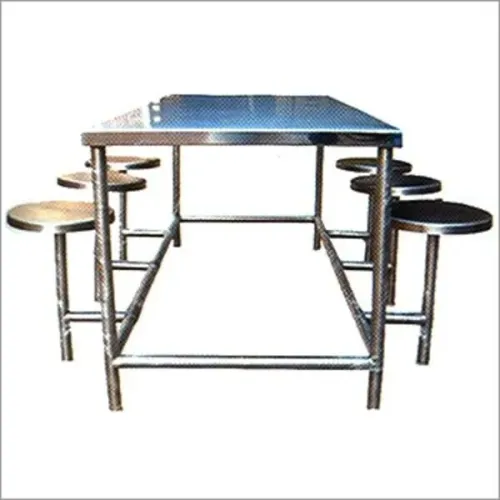
| Modular tables | Laboratories and tutorials | Students need shared equipment, group discussion, instructor circulation or several layout patterns | Higher purchase and storage demands than fixed benches |
A fixed bench suits a lecture hall only when aisles, knee clearance and cleaning access remain usable after installation. Avoid it in laboratories: fixed seating restricts access to sinks, power points and apparatus, while spilled chemicals are harder to clean around joined frames.
Select individual desks for examinations when invigilation requires clear sightlines and controlled spacing. Choose modular tables for tutorials when groups change frequently; specify non-marking glides, radiused edges and cleanable joints so repeated movement does not damage floors or create injury points. Test one complete production sample before approving the room set.
Dimensions, Capacity and Total Cost of Ownership
Usable room capacity is the number of seats that fit after circulation, door swings, columns, laboratory services and required access routes are removed. Calculate it from an approved layout, not by dividing floor area by desk footprint: multiply seats per row by rows that fit, then verify every aisle and exit route on the drawing.
Record these measurements from a representative production sample before ordering:
- Desk or bench width, depth, height and row-to-row pitch
- Clear aisle widths, tablet projection and floor-contact points
- Mass, steel section, wall thickness, finish and hardware
A catalogue image cannot reveal tube thickness, internal reinforcement or coating gaps. At delivery, check quantity, dimensions, rocking, sharp edges, weld finish, coating damage, tablet alignment, fastener tightness, floor-glide contact and stability in the intended direction of use.
Compare the costs like this:
| Cost layer | Include | What it reveals |
|---|---|---|
| Purchase | Unit rate, quantity and taxes | The quoted price only |
| Installed | Freight, assembly, floor protection and layout changes | The cost of making furniture usable |
| Ownership | Glides, fasteners, tablets, weld repairs and cleaning interruptions | The cost of keeping rooms operational |
| Replacement | Spare-part availability, repair response and lead time | The cost of failures during term time |
Standardise frame sizes, glides, fasteners and tablet components across campus to reduce stock and repair complexity. Ask an educational furniture supplier in Maharashtra to price spares and replacement lead times separately; that makes educational furniture for colleges comparable beyond the invoice total.
How to Specify and Accept a College Furniture Order
Put every measurable promise in the quotation, not in a verbal assurance. “Heavy duty MS” is not a specification unless it names the tube or angle section, wall thickness, steel grade, joint method, weld quality, surface treatment, dimensional tolerances and applicable load or durability test.
1. Approve one representative production sample before placing the full order. Record its overall dimensions, seat and tablet dimensions, mass, steel sections, wall thickness, coating system, fastener type, floor-glide material and any internal reinforcement. A catalogue photograph cannot reveal thin tubing, incomplete coating or unsealed tube ends.
2. Attach a signed drawing and inspection checklist to the purchase order. State allowable dimensional deviation, acceptable weld appearance, edge radius, tablet alignment, rocking tolerance, coating coverage and the required direction of stability testing.
3.
Inspect the sample and delivery in this order: count units; measure selected dimensions; check rocking and stability; run a hand over every user-contact edge; inspect welds, cut ends, crevices and scratches; tighten and test fasteners; confirm every leg contacts the floor through a non-marking glide; then load the seat or tablet in its intended direction.
4. Reject or record corrective action for sharp edges, exposed steel, chipped coating, loose joints, misaligned tablets, damaged glides or wet-trapping leg ends. Include delivery, assembly, floor protection, spare parts, repair response and replacement lead time in the comparison.
Before appointing an educational furniture manufacturer in Maharashtra or educational furniture supplier in Maharashtra, ask whether the same glides, fasteners and tablet parts can serve the campus. Whether assessing Kohinoor School Furniture or another manufacturer, standardised components make later repairs faster and less expensive.
Related products
 | Pioneers in the industry, we offer Nursery Class School Furniture Set, Pre-Primary School Furniture Set, Nursery Classroom Furniture, School Class... View product → |
 | Size Customized Color Blue Design Type Customized Material Wooden We are offering School Furniture to our clients. View product → |
Frequently asked questions
What conditions shorten the service life of MS furniture in colleges?
Dragging, impacts, wet mops, dust and repeated cleaning can damage joints, finishes and floor contacts. Protected joints and non-marking glides address common failure points.
Which construction details should colleges inspect before ordering MS furniture?
Inspect welded joints, edge radiusing, floor glides, frame protection and the finish. These details affect safety, stability, corrosion resistance and maintenance effort.
How should colleges choose furniture formats for different rooms?
Match the format to the room’s use: flexible desks for teaching rooms, robust layouts for laboratories, quiet work surfaces for libraries and easy-to-rearrange units for examination halls.
How can a college compare the total cost of MS furniture?
Include purchase price, delivery, installation, cleaning, repairs, replacement parts, floor damage and expected service life rather than comparing unit prices alone.
What should a college check when accepting a furniture order?
Verify dimensions and quantities, then inspect welds, finish consistency, edge safety, stability, floor glides, damage and the documents supplied with the order.