Food debris, standing water, loose fasteners and damaged coatings shorten a canteen table’s useful life long before the tabletop looks unusable. A defined cleaning schedule, material-specific care, pre-opening inspection and documented repair process will help you prevent avoidable damage and remove unsafe tables before students use them.
Key takeaways
- Clean table edges, joints and undersides after every meal.
- Use a cleaner suited to laminate, wood, plastic or metal surfaces.
- Isolate loose, sharp, swollen or unstable tables before repair.
- Document dimensions, materials, corrosion protection and replacement parts.
Use a Cleaning Routine That Reaches the Underside
After each meal, clean the tabletop and the hidden areas where food, mop water and spills collect. A surface that looks clean can still conceal odour, swelling or corrosion beneath its edge.
- Remove crumbs and food scraps from the tabletop, edge, underside, leg plates and frame joints.
- Wash with a clean cloth or non-abrasive pad and a pH-neutral detergent diluted according to its label.
- Rinse with clean water so detergent residue does not attract soil or leave a sticky film.
- Apply a compatible disinfectant when your food-safety procedure requires it. Keep the surface visibly wet for the product’s stated contact time; wiping it off immediately reduces its effectiveness.
- Dry the tabletop, sealed edges, underside, joints and fasteners with a clean microfiber cloth. Do not leave standing water around legs or beneath the panel.
Keep table-cleaning cloths and buckets separate from floor mops. A floor mop can transfer grit and microorganisms back onto a food-contact surface, while grit scratches finishes and holds more soil.
Include the underside check in your educational canteen furniture care routine, especially during Pune’s monsoon. Staff should report swollen edges, bubbling coating, rust stains or a persistent smell instead of covering them with more disinfectant. Water entering exposed MDF or particleboard will not be reversed by drying; isolate the table and arrange repair or replacement.
Match the Cleaner to the Table Surface
Use a pH-neutral detergent, clean water and a dry microfiber cloth as the default for every tabletop. Match the pressure, moisture and disinfectant to the finish; the wrong cleaner can turn a small spill into corrosion, dullness or swelling.
| Surface | Safe cleaning method | Avoid |
|---|---|---|
| Powder-coated steel | Wipe with diluted neutral detergent, rinse residue and dry chipped edges, joints and leg plates | Abrasive powder, steel wool and strong acid; they expose steel and start rust |
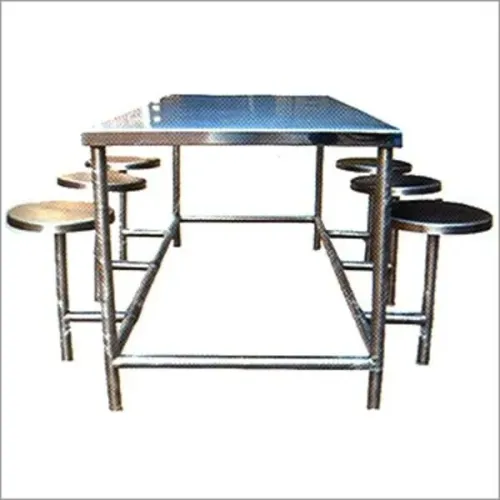
| Stainless steel | Clean with neutral detergent, rinse chloride residue and dry in the direction of the grain | Bleach, hydrochloric-acid descaler and salty food waste; they cause pitting |
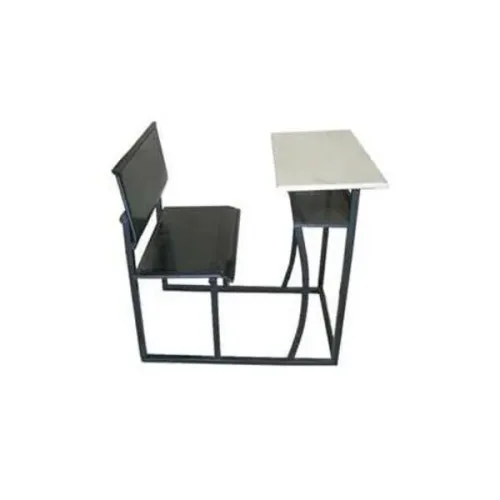
| Laminate | Use a soft cloth with neutral detergent, then dry the top and sealed edges | Abrasive cleaners, standing water and hard scrubbing; scratches retain soil and open edges |
| Painted wood | Use a lightly damp cloth, remove residue and dry immediately | Soaking, solvent cleaners and bleach; moisture lifts paint and reaches the core |
| Plastic | Wash with neutral detergent and rinse; use a disinfectant only after checking the manufacturer’s compatibility instructions | Abrasive pads, powders and unapproved solvents; they dull or craze the surface |
For an educational furniture canteen table for maintenance in Pune, require sealed top edges, sealed penetrations and a moisture-resistant core. Mop water entering exposed particleboard or MDF can cause permanent swelling; drying will not restore its dimensions. Inspect underneath as well, because trapped moisture around edges and fasteners creates odour and corrosion.
Build Daily, Weekly and Termly Maintenance Into the Schedule
Set a fixed schedule instead of waiting for visible failure. Daily checks catch trapped moisture and loose fasteners; weekly checks expose developing corrosion and scratches; termly servicing prevents a weak joint or swollen edge from becoming a replacement job.
- Daily, after cleaning, inspect tabletop edges, underside panels, leg plates and frame joints. Wipe away water trapped beneath edges or around feet, then look for rocking, fresh scratches, chipped coating, exposed metal and food lodged in joints. Monsoon wetting and mop water can damage a hidden underside while the tabletop still looks clean.
- Weekly, deep-clean the frame underside and inspect every accessible bolt, floor glide and mounting plate. Tighten loose fasteners to the manufacturer’s specification, not by guesswork. Record table IDs with repeated loosening, because a moving joint changes the load path when pupils lean on the table.
- Termly, examine edge seals, penetrations, welds, leg alignment and powder-coated steel for bubbling or rust. Repair coating damage by removing loose coating and corrosion, cleaning and drying the steel, applying a compatible corrosion-inhibiting primer where appropriate, then adding matching touch-up coating. Do not paint over bubbling rust.
- Termly, check laminate, painted wood and particleboard edges for swelling. Cleaning cannot restore a panel after water enters an exposed core; replace the affected top or edge section instead of hiding it with filler.
For canteen table maintenance in Pune, log the date, table ID, defect, action and follow-up stability check. This record reveals whether the same leaking edge or loosening leg keeps returning.
Know Which Defects Need Repair and Which Need Isolation
Quarantine any table that rocks, racks, has a sharp metal edge or shows movement at a leg joint. Do not return it to service because the defect looks minor: a loose bolt, failed weld or cracked mounting plate can shift the load path when pupils lean on the tabletop.
| Defect found | Decision | Return-to-service condition |
|---|---|---|
| Loose leg bolt or fastener | Tighten and recheck | No movement, rocking or repeat loosening |
| Worn floor glide, replaceable leg or mounting plate | Repair or replace the part | Leg alignment and floor contact are stable |
| Cracked weld, fractured primary joint or distorted frame | Quarantine; arrange controlled workshop repair or replacement | Stability check passes under normal leaning and loading |
| Delaminated edge or swollen MDF/particleboard core | Replace the affected top or edge section | Sealed replacement edge has no flex or exposed core |
| Deep scratch, chipped coating or surface stain | Repair during scheduled maintenance | Surface is smooth, sealed and free of sharp projections |
Inspect each table ID for joint tightness, weld cracks, leg alignment, floor glides and exposed metal. Push lightly at opposite corners; movement, rocking or a returning gap means isolation, not further use.
Do not hide swelling with filler, adhesive or paint. Water entering an exposed core changes its dimensions permanently, so educational canteen furniture care must treat replacement as the reliable remedy.
Require the repair record to state:
- Table ID and defect category
- Repair action and replacement parts
- Finish match
- Post-repair stability check
- Repeat defects noted for procurement review
Specify and Document Tables for Pune’s Canteen Conditions
Check the table’s hidden failure points before approving a purchase: sealed top edges, sealed penetrations, a moisture-resistant core, stable legs and a frame that survives repeated leaning, dragging and impact. For an educational furniture canteen table for maintenance in Pune, a showroom finish is not enough.
Use this approval checklist:
- Run a wet-cleaning trial, then inspect the top edge, underside and leg plates for swelling, water traps or odour.
- Drag each sample repeatedly and retighten its fasteners; examine the frame for distortion, stripped holes and cracked welds.
- Test for rocking on an uneven floor, then check leg alignment, floor glides, joint tightness and sharp exposed metal.
- Ask which test standard supports the strength claim. EN 15372 covers strength, durability and safety for non-domestic tables; EN 1730 specifies table test methods.
- Record the core material, edge-sealing method, finish, replacement parts and warranty exclusions.
For canteen table maintenance in Pune, include the underside and edges in the handover specification. Mop water trapped around a leg plate can corrode steel or swell particleboard; cleaning cannot restore swollen dimensions.
Appointing a canteen table repair supplier in Pune requires an inspection report for every table, not merely a visit count. Require the table ID, defect category, repair action, replacement parts, finish match and post-repair stability check.
Ask Kohinoor School Furniture to use that format when quoting or servicing tables, so repeated leaking edges or loosening legs become visible in your procurement records.
Related product
 | Offering you a complete choice of products which include Six Sitter Canteen Table, Cafeteria Canteen Tables, Restaurant Canteen Tables, Office... View product → |
Frequently asked questions
What areas of a canteen table need cleaning?
Clean the tabletop, underside, edge banding, joints, frame, feet and floor-contact points. Food residue and mop water collect in these hidden areas.
How do you choose a cleaner for an educational canteen table?
Match the product to the surface. Use a mild detergent for laminate and plastic, avoid abrasive powders, and dry metal edges and joints after cleaning.
How often should canteen tables be maintained?
Wipe and inspect tables daily, clean frames and undersides weekly, and complete a detailed inspection at the start or end of each school term.
Which canteen table defects require immediate isolation?
Remove tables with sharp edges, loose frames, broken welds, severe corrosion, unstable legs or swollen board cores until a qualified person repairs them.