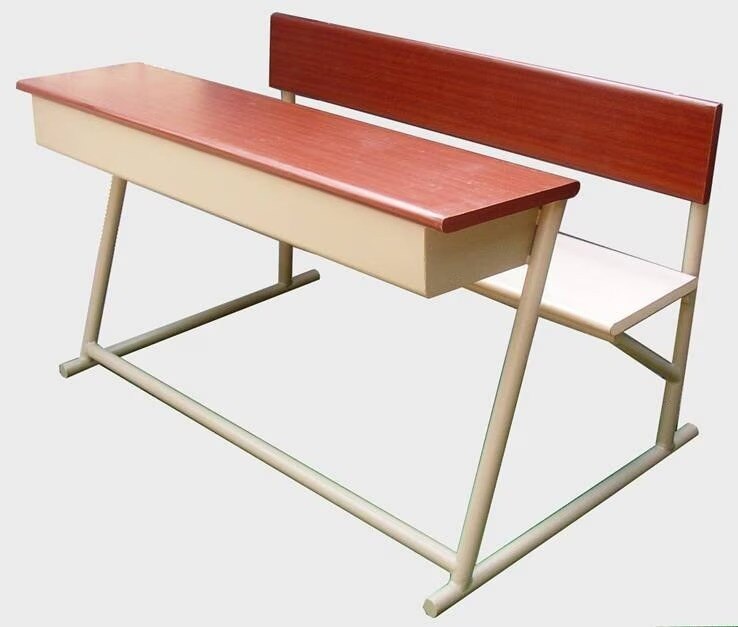
The right choice depends on more than whether a frame is made from mild steel. By comparing classroom use, student dimensions, construction, corrosion protection, delivered cost, and supplier support, you can decide whether a shared MS bench will serve your school better than wood, plastic, stainless steel, or individual desks.
Key takeaways
- MS identifies the steel frame, not the bench’s complete specification.
- Match seat height and desk dimensions to student age and classroom layout.
- Inspect tube joints, welds, edge treatment, fasteners and protective coating.
- Compare delivered cost, maintenance and replacement effort before approving a supplier.
What an MS School Bench Is Built to Do
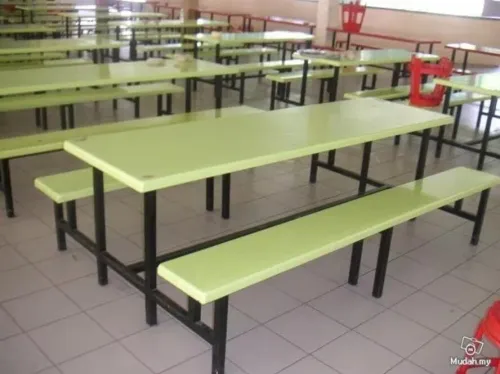
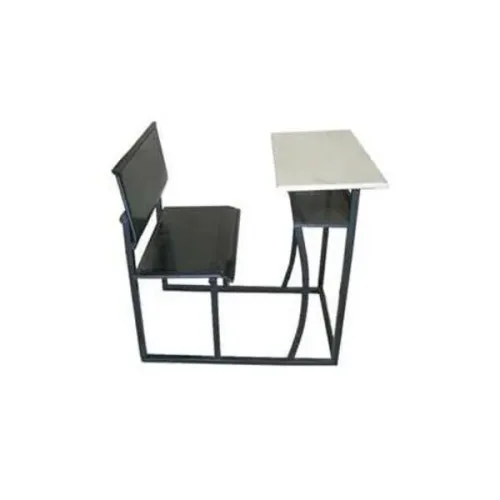
An MS school bench uses a mild-steel tubular frame beneath a seat and writing surface made from plywood, timber, laminated board, or moulded material. “MS” describes the steel, not the complete product; it does not guarantee a tube size, coating, load rating, or service life.
Choose the format that matches the room and its daily use:
| Format | Best fit | Why choose it | Main compromise |
|---|---|---|---|
| MS bench | Fixed classrooms, tuition rooms, examination rooms | Seats two or more pupils and withstands repeated institutional use, impacts, and termites | A heavy or poorly protected frame can damage floors and rust |
| Wooden bench | Traditional classrooms and warm-looking interiors | Easy visual coordination and straightforward carpentry repairs | Scratches, moisture, termites, and loose joints demand closer maintenance |
| Plastic chair and desk | Flexible rooms and frequent layout changes | Light units move easily and separate seating supports individual use | Less shared writing space and lower resistance to rough handling |
| Individual single desk | Older pupils, examinations, and assigned seating | Gives each student personal space and limits desk-sharing disputes | Costs more per seat and uses more floor area |
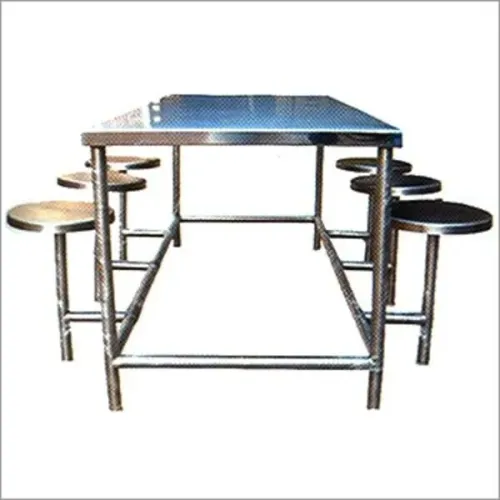
| Stainless-steel bench | Wet, corrosive, or hygiene-sensitive areas | Resists corrosion better than ordinary steel | Higher material cost without automatically improving comfort or frame design |
Metal school benches make more sense when you need stable shared seating, compact rows, and a surface that survives daily use. They suit a fixed classroom better than a room that is rearranged several times a day.
For a buyer selecting an MS school bench for school furniture, specify the actual frame, top, fasteners, glides, and finish rather than accepting “MS bench” as a complete description.
A bench is the wrong choice when pupils need individual adjustment, staff must move furniture constantly, or dragging weight will harm the floor. The metal frame also does not make the writing top vandal-proof or maintenance-free; sealed edges, protected feet, and replaceable components matter.
Match Bench Dimensions to Students and Classroom Space
A bench fits only when its user dimensions, two-student capacity, and occupied floor area appear together on the specification—not just its overall length. An MS school bench for school furniture should state the pupil height or age group it serves, not merely “standard size.”
| Student group | Seat height | Seat depth | Writing-surface height | Writing-surface depth | Typical capacity |
|---|---|---|---|---|---|
| Primary pupils | 300–350 mm | 300–340 mm | 520–600 mm | 350–400 mm | Two pupils |
| Older primary pupils | 350–380 mm | 340–370 mm | 600–680 mm | 400–450 mm | Two pupils |
| Secondary pupils | 380–450 mm | 360–420 mm | 680–760 mm | 400–500 mm | Two pupils |
Treat these ranges as planning points, then match them to your school’s pupil measurements and the applicable furniture standard. A correct seat height with a desk that is too high still forces raised shoulders; insufficient knee clearance makes a structurally strong bench unusable.
For room planning, record the overall bench width, front-to-back depth, and clear leg and knee space. Add the aisle and movement clearance around each unit; do not calculate capacity from the bench footprint alone.
Mark the proposed rows on the classroom plan, including teacher access, door swing, emergency routes, and the distance needed to pull a pupil’s legs back.
Ask for the stated maximum load per seat and per writing surface, plus a clear two-seater capacity. A heavier bench is not automatically the better choice if its weight encourages dragging and damages the floor; specify floor glides and a manageable unit weight.
Check the Frame, Joints, Top and Protective Finish
A durable MS bench has a specified tube section, wall thickness, steel grade, joint method and protective finish. “MS” alone proves only that mild steel is involved; it does not guarantee load capacity, corrosion resistance or service life.
The joints deserve more attention than the straight tubes. Look for continuous, fully fused welds without cracks, sharp spatter or visible gaps. On a sample, push sideways and rock the bench: movement, racking or legs that do not sit square indicate weak welding or poor alignment.
- Request a construction schedule showing tube dimensions, wall thickness, weld locations, fastener sizes and whether the frame is fully welded or knock-down.
- Measure the frame diagonals; unequal diagonals reveal a twisted rectangle that will keep rocking on the floor.
- Inspect every tube end. Open ends collect water and rust internally; sealed ends or designed drainage openings are safer.
- Check that the coating covers welds, corners and the underside without bare patches, pinholes, bubbles or flaking edges.
- Ask how the steel was cleaned before coating and obtain a finish sample, not just a colour name. Poor surface preparation causes peeling even when the top coat looks attractive.
- Specify sealed board edges, flush or captive fasteners, and replaceable writing tops. Laminate can chip or swell while the frame remains sound.
- Fit nylon or rubber glides to protect flooring and keep moisture away from exposed feet.
Metal school benches resist impact and termites, but they are not maintenance-free. For durable school furniture in Pune, make the warranty cover weld failure, frame deformation, coating failure, loose hardware and board swelling separately, including labour and replacement parts.
Calculate the Real Cost of an MS Bench in Pune
Compare an MS school bench in Pune by delivered cost, not the price printed beside one unit. Ask for a quotation that states tube construction, coating, board or seat material, dimensions, quantity, taxes, delivery date, and warranty exclusions.
| Cost item | Include in comparison | Cost risk |
|---|---|---|
| Freight and unloading | Vehicle charge, unloading labour, and delivery protection | A low unit price can disappear at the gate |
| Assembly and installation | Bolting, levelling, floor protection, and installer labour | Knock-down frames need more site work |
| Packaging and spares | Packaging removal, replacement hardware, and spare glides | Disposal and small repairs become school labour |
| Transport volume | Vehicle space for welded versus nested frames | Welded frames cost more to move but reduce loose joints |
A local school furniture supplier in Pune can reduce freight and replacement time, but local availability does not prove better steel or coating. Ask for a pre-production sample, measured shop drawings, finish samples, and a written process for transit damage.
- Confirm whether the warranty covers weld failure, frame deformation, coating failure, loose hardware, and swollen boards separately.
- Check whether labour, transport, and replacement parts are included.
- Ask how quickly damaged units and missing hardware will be replaced.
Kohinoor School Furniture should be judged by the same evidence: sample approval, delivery protection, installation responsibility, and a documented after-sales response. Compare the final per-unit figure after every charge, then test it against your floor type, wet-mopping routine, dragging frequency, and available repair staff.
Related product
 | Size Customized Color Brown and Cream Design Type Customized Material MS We are offering MS School Bench to our clients. View product → |
Use a Specification and Acceptance Checklist Before You Commit
A purchase order should define the bench you will accept, not merely name “MS school bench.” Attach a measured drawing, approved finish sample, and pre-production sample so the delivered batch has a reference.
1. Specify seat height, seat depth, desk height, desk depth, overall width, leg clearance, student capacity, tube or sheet sections, weld type, floor glides, edge treatment, and unit weight. State whether the frame is fully welded or knock-down, because extra bolted joints add loosening points and installation work.
2. Name the corrosion system: cleaning or pretreatment, powder-coat type, coverage or thickness, sealed tube ends, drilled-hole treatment, weld finishing, and touch-up method. Require written repair instructions for scratches, exposed steel, and damaged coating.
3. Record delivery terms for unloading, assembly, installation, packaging removal, floor protection, replacement hardware, and transit damage. Ask the school furniture supplier in Pune how quickly it will replace bent frames, missing parts, or damaged tops.
4. Before signing acceptance, inspect an agreed sample drawn across the batch. Measure dimensions, check rocking and fastener tightness, run a hand over every edge, and look for sharp welds, pinholes, bare steel, scratches, missing plugs, swelling, and laminate-edge damage.
5. Put the defect threshold and replacement deadline in writing. Separate warranty coverage for weld failure, frame deformation, coating failure, loose hardware, and board swelling, including labour, transport, and parts.
Compare the delivered cost with the effort of moving, cleaning, and repairing each unit. “Durable school furniture in Pune” means furniture suited to your floors, mopping, dragging habits, storage conditions, and repair capacity—not simply the heaviest frame.
Frequently asked questions
What does MS mean in an MS school bench?
MS means mild steel and describes the tubular frame. It does not specify tube size, coating, load rating or service life.
How do you match an MS bench to students and classroom space?
Check seat height, writing-surface height, seat depth and bench length against student age, posture and the room’s aisle spacing.
What should you inspect before accepting metal school benches?
Check tube dimensions, weld continuity, joint alignment, fasteners, rounded edges, surface preparation, coating coverage and stability on the floor.
How do you calculate the real cost of an MS school bench in Pune?
Add the quoted unit price to delivery, installation, taxes, floor protection, maintenance, replacement parts and the labour needed for future repairs.