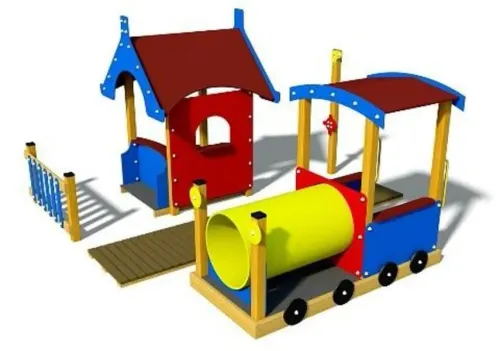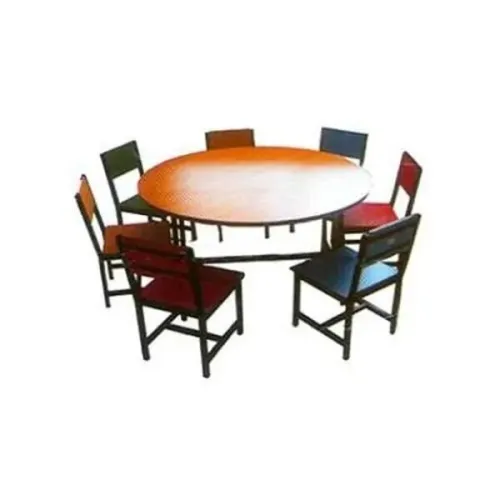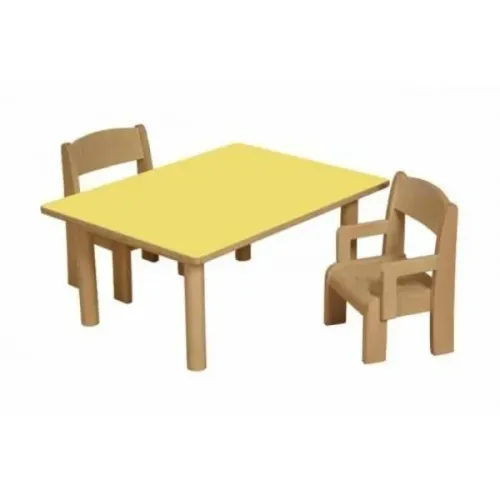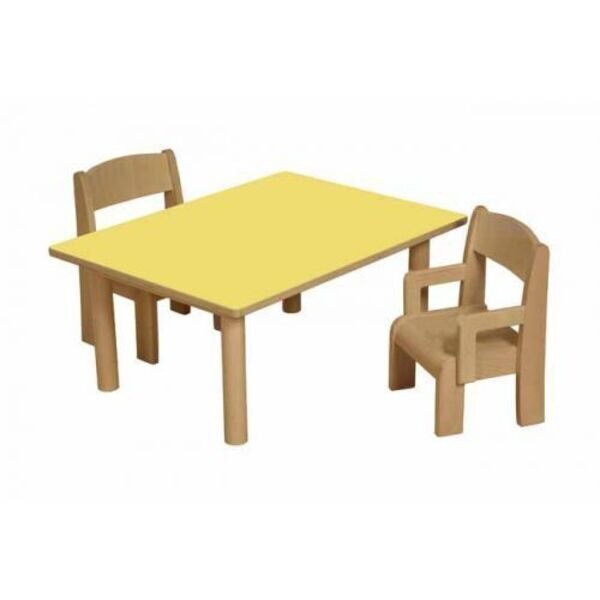
The right nursery furniture does more than provide small tables and chairs: it supports stable posture, independent movement and quick changes between play, meals, art and group learning. By the end, you will be able to compare dimensions, materials, safety features, room layouts and supplier handover checks for a Pune classroom.
Key takeaways
- Match seat height to children’s feet, knees and back support.
- Leave clear routes for supervision, movement and emergency access.
- Inspect rounded edges, stable frames, non-toxic finishes and cleanable surfaces.
- Record dimensions, materials, warranties and handover checks in the specification.
How correctly scaled furniture supports posture and fine-motor learning
A correctly scaled chair keeps a child’s back supported, feet on the floor and knees approximately level, so the child can sit steadily instead of sliding forward or perching on the edge. The table should let elbows rest comfortably without raised shoulders, giving children stable control during drawing, colouring, cutting and early pencil work.
| Feature | Correctly scaled furniture | Furniture that is too large |
|---|---|---|
| Seat height | Feet reach the floor; hips and knees stay stable | Legs dangle, causing sliding, fidgeting and poor balance |
| Seat depth | Back touches the support while knees remain clear of the edge | The child perches forward or loses back support |
| Table height and clearance | Forearms rest freely with enough legroom to change position | Raised shoulders, bent wrists or cramped legs restrict movement |
| Reach | Materials remain within an easy arm’s length | Children stretch, twist or leave their seats to collect tools |
These nursery school furniture benefits extend beyond comfort. Stable seating frees the hands for controlled finger movements, while a reachable tabletop supports two-handed tasks such as holding paper while cutting. Children can concentrate longer on mark-making, puzzles, beads and construction because they spend less effort holding themselves upright.
Assess preschool furniture advantages against children’s stature, not only the “nursery” label. Ask for seat height, table height, seat depth and clearance, then compare those measurements with the actual children using the room; EN 1729’s height-based size classes provide a useful reference.
How a flexible nursery layout helps teachers manage the day
A flexible room lets one teacher see more children without interrupting play. Choose lightweight tables and chairs that adults can move quickly, but test each assembled unit for stability so “movable” does not mean easy to tip or slide.
Use furniture to create zones that can change during the day:
- Keep a clear central floor area for circle time, movement and transitions between activities.
- Place small tables where the teacher can reach every seat during drawing, cutting or group work.
- Use low, open shelves to separate story, construction and quiet-play areas without blocking sightlines.
- Leave wide paths between zones so children can move without crossing another group’s work.
- Set tables in small groups, then separate them for individual tasks or meals.
This arrangement reduces the time spent carrying children or rearranging a crowded room. It also supports the Foundational Stage emphasis on play, activity and inquiry rather than prolonged sitting. Clear floor space matters: children aged 3–4 need substantial movement spread across the day.
Low storage gives children a practical routine: choose a material, use it and return it. Store heavy items on lower shelves, anchor tall or narrow units to the wall, and keep every reachable shelf free from climbable gaps.
These are useful nursery classroom set benefits, while school furniture benefits for nursery classes Pune schools seek depend on safe, independent access rather than storage capacity alone.
Which dimensions and safety details should Pune schools inspect
Measure the child, not the class label. A specification for school furniture for nursery classes Pune schools buy must state intended seat height, table height, seat depth, tabletop clearance and legroom, then compare those figures with the actual children’s stature.
EN 1729 uses height-based size classes, so request the size class rather than accepting “nursery size.”
| Feature | Inspect | Failure sign |
|---|---|---|
| Seat height | Feet rest flat and knees sit approximately level | Child slides forward or dangles feet |
| Seat depth | Back touches the backrest without pressure behind the knees | Child perches on the front edge |
| Table height | Elbows rest comfortably during drawing and cutting | Raised shoulders or bent wrists |
| Table clearance | Knees and legs pass beneath without contact | Child twists sideways or strikes the frame |
| Footprint | Base remains stable during entry and movement | Table rocks, tips or blocks walkways |
Run a physical trial with representative children before ordering. Check back support, rounded edges, sealed surfaces, covered fasteners and smooth welds; any sharp corner, exposed screw or splinter can cause an avoidable injury.
Lightweight chairs and tables should move easily but must not rock under normal pushing. Give storage a wide, stable base, anchor tall or narrow units to the wall, and keep heavy materials on low shelves. Check for finger-trap gaps, loose end caps and pinch points at folding parts.
Record these checks at installation, along with actual measurements, wobble, anchoring and replacement-part needs. Leave clear floor space for circle time, play and movement instead of filling the room with cupboards.
How materials, cleaning and movement affect long-term classroom value
A material earns its place when it survives wet mopping, humid monsoon days, paint spills and repeated lifting without becoming a repair problem. Compare the complete construction, not just the tabletop: sealed edges, joints, fasteners, underside and leg feet determine the nursery school furniture benefits you actually receive.
| Material | Cleaning and monsoon performance | Daily-use trade-off | Inspect before ordering |
|---|---|---|---|
| Wood | Warm and repairable, but unsealed edges can absorb water, swell or delaminate | Stable, though heavier to move | Check sealed edges, moisture-resistant board, joint strength and finish-care instructions |
| Plastic | Non-porous surfaces wipe quickly and resist routine spills | Light and easy to rearrange, but brittle plastic can crack under impact | Press for the plastic type, load rating, rounded edges and resistance to the specified cleaner |
| Metal | Powder-coated steel cleans well; exposed scratches can rust during humid weather | Strong, but heavy frames can slow transitions and damage floors | Examine coating continuity, welds, corrosion protection, capped feet and noise during movement |
| Wood-and-stainless-steel | Wood supplies a quieter, warmer surface while stainless steel handles frequent wiping and moisture | Durable, but added weight and poorly sealed interfaces create cleaning traps | Check stainless grade, sealed wood-to-steel joints, smooth welds and accessible undersides |
Use only a cleaner whose label permits the surface, and follow its contact time; harsh disinfectants can dull finishes, damage plastic or loosen edge adhesive. Choose pieces that one adult can move safely, stack only when stable, and leave clear floor for activity. These preschool furniture advantages protect cleaning time, teacher effort and long-term usability.
What to include in a nursery furniture specification and handover
Compare suppliers against a written specification and signed handover, not catalogue photographs or carton count. The school furniture benefits for nursery classes Pune schools need depend on quick changes between circle time, art, meals and group work, so ask for movable pieces, child-reachable storage and an adult-height work surface.
| Comparison point | Ask each supplier to state | Reject or record at handover |
|---|---|---|
| Supplier evidence | Actual seat height, table height, seat depth, tabletop clearance, legroom, footprint and children per table | Dimensions that differ from the approved drawing |
| Safety and usability | Rounded edges, capped tube ends, stable legs, non-porous surfaces, sealed joints and wall restraints for tall storage | Wobble, rocking, sharp edges, missing caps, exposed fasteners or unanchored units |
| Ongoing support | Installation method, spare glides and caps, replacement-part availability, warranty contact and permitted cleaning chemicals | No parts route, unclear cleaning instructions, laminate lifting or damaged edge adhesive |
The school furniture for nursery classes Pune buyers shortlist should arrive with an installation inspection, not merely a delivery note. Kohinoor School Furniture can be asked to document these details in the quotation so competing offers are measured on support as well as price.
- Confirm children can sit with back support, feet on the floor and knees approximately level.
- Check that low shelves cannot tip, and anchor tall or narrow units to the wall.
- Mop beneath furniture and test the stated cleaner for its label contact time; aggressive disinfectants can dull laminate or weaken adhesives.
- Photograph defects, record quantities and obtain a signed correction date before accepting handover.
That record protects the nursery classroom set benefits after installation, when daily cleaning and movement expose weak construction.
Related products
 | Pioneers in the industry, we offer Nursery Class School Furniture Set, Pre-Primary School Furniture Set, Nursery Classroom Furniture, School Class... View product → |
 | School Furniture Nursery Class School Furniture Set Size Customized Color Yellow Design Type Customized Material Wooden Chair 2 Table 1 We are offering Nursery Class School Furniture Set to our clients. View product → |
Frequently asked questions
How does correctly scaled nursery furniture support learning?
A chair that supports the back and keeps feet on the floor helps children sit steadily. A correctly sized table lets them draw, colour, cut and practise early pencil control without raised shoulders or unstable posture.
How should Pune schools arrange a flexible nursery classroom?
Use movable tables and chairs to switch between individual work, small groups, story time and open floor activities. Keep clear routes so teachers can supervise children and move quickly across the room.
Which nursery furniture dimensions and safety details should schools inspect?
Check seat height, seat depth, table height, knee clearance and foot support against the children who will use them. Inspect rounded edges, stable frames, pinch-point protection, smooth finishes and non-toxic, easy-to-clean surfaces.
What should a nursery furniture specification and handover include?
Record quantities, dimensions, materials, colours, load limits, assembly requirements, warranty terms and cleaning instructions. During handover, check every item for stability, damage, correct sizing, secure fasteners and safe operation.
Related products
 | School Furniture Use Classroom Color Brown Size Customized Design Type Customized Material Wooden and SS We are offering Nursery Classroom Furniture to our clients. View product → |
 | Size Customized Color Green and Brown Design Type Customized We are offering Scholar Nursery Furniture to our clients. View product → |