A conventional 720–750 mm boardroom table is too high and too difficult to supervise for nursery children. You can make a conference-style table work only by specifying it as a child-height activity table, then checking its dimensions, stability, circulation space, cleanability and intended activities against the classroom.
Key takeaways
- Reject adult-height boardroom tables for nursery use.
- Specify child-height dimensions, rounded edges and stable construction.
- Test table access, circulation and supervision inside the classroom.
- Compare the quote with your existing nursery furniture and replacement costs.
A boardroom table is the wrong starting point for nursery children
Yes—but only as a child-height, supervised collaborative activity table, not as meeting-room furniture. A “conference table for nursery school pune” can mean three products: an adult-height meeting table, a child-height collaborative table, or a modular group-work table.
The conventional 720–750 mm boardroom table is the wrong default. It requires adult chairs, leaves young children without reliable foot support, and creates unsafe climbing access when children try to get comfortable.
| Option | Best use | Main trade-off |
|---|---|---|
| Low activity table | Drawing, meals and sensory work | Less adaptable for large groups |
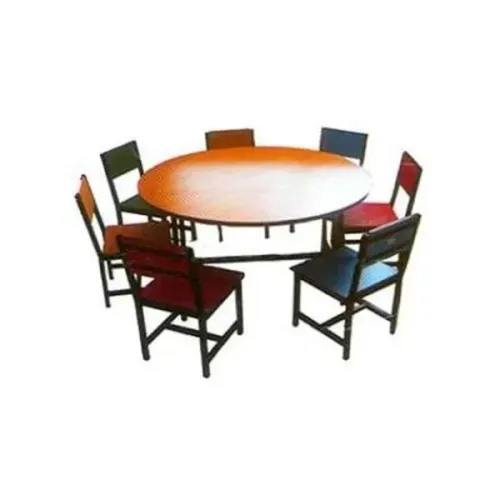
| Round or oval table | Teacher access and face-to-face interaction | Occupies a wider footprint |
| Trapezoid table | Flexible group layouts | Needs careful arrangement |
| Floor seating | Circle time | Does not replace a seated work surface |
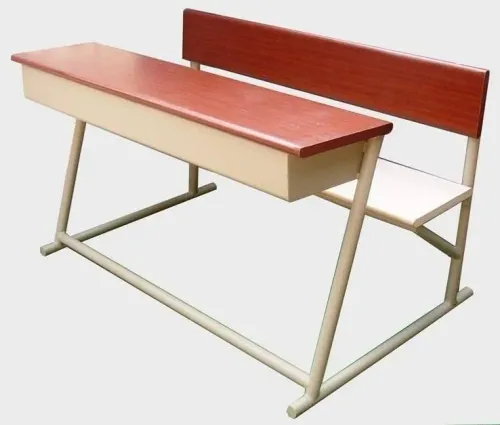
| Individual desks | Personal boundaries and focused tasks | Reduces collaboration |
Choose a child-height table using the children’s height band and the applicable EN 1729-1 size mark in the purchase order, not the word “conference.” A long fixed top places children in the middle farther from the teacher; a small round, oval, or modular design keeps help, supervision and safe exit routes closer.
Floor seating belongs alongside the work table, not instead of it.
Specify child proportions, not an adult table with smaller chairs
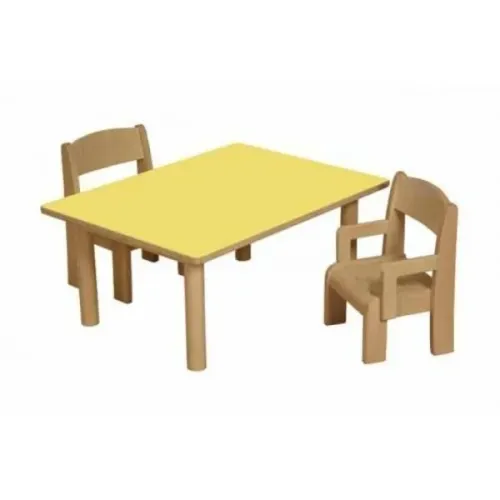
A conference table for preschool Pune classrooms must fit children’s proportions, not pair an adult-height top with smaller chairs. Ask for a dimensioned drawing showing table height, seat height, clear leg space, tabletop thickness, corner radius and recommended child-height range.
Use the applicable EN 1729-1 category after measuring the children or confirming the nursery’s age and height band. Common early-years table heights are approximately:
- 460 mm for the smallest category
- 530 mm for the next category
- 590 mm for the following category
Do not accept a generic 750 mm table. A child whose feet cannot rest securely will push, swing, climb or lose balance. Check the drawing also shows enough elbow room for drawing, plates, blocks and shared materials, plus an exit route that does not require climbing over another chair.
| Table height | Suitable use | Layout consideration |
|---|---|---|
| 460 mm | Smallest early-years height band | Use after confirming child measurements |
| 530 mm | Next early-years height band | Check chair and leg clearance together |
| 590 mm | Taller early-years height band | Select only for the confirmed height range |
Choose a round, oval, square or short modular top when teachers need to reach every child. Specify a wide, low-footprint base, non-slip feet and resistance to rocking or racking when a child pushes the edge. A large fixed top may claim more seats while leaving children in the middle harder to reach.
Test the table inside the Pune classroom before ordering
A correctly sized table can still fail in a Pune nursery classroom. Draw the table, chairs and teacher position to scale on the floor plan before ordering, then mark the door swing, emergency route, storage units, handwashing access and clearance for pulling out every chair.
Leave a continuous teacher route around the table. An adult must reach each child without leaning across the tabletop, and the teaching position must provide clear sightlines to every face; a long fixed top can hide unsafe play, spills or distress.
| Table type | Strength | Risk to test |
|---|---|---|
| Long fixed table | Seats a group in one footprint | Children in the middle are harder to reach; it can obstruct floor play |
| Round or oval table | Improves access and supervision | Check that its footprint does not block the emergency route |
| Lightweight modular tables | Separate for cleaning, rearrange for groups and move from wet areas | Check stability when linked and storage space when separated |
Test each use separately:
- Circle time
- Drawing
- Block play
- Meals
- Sensory activities
- Parent meetings
- Teacher planning
A table that suits worksheets can prevent children gathering in a circle or leave no floor-play area. During Pune’s monsoon, confirm the table passes through the door, moves aside for wet mopping and leaves clearance for chairs and activity materials. Compare the fixed design with modular tables on the plan, not just in a catalogue.
Use early-years safety checks that a catalogue photograph cannot show
A catalogue photograph cannot reveal whether a nursery table withstands pulling, leaning, spills and repeated cleaning. Inspect a physical sample, and examine every accessible edge and corner for a continuous rounded profile.
1. Reject sharp corners, splintering timber, exposed bolts, protruding brackets and deep grooves that retain food or paint. Check underneath the top and between folding legs for scissor-like gaps that could trap fingers.
2. If the table folds or adjusts in height, require a positive lock that engages visibly, guarded moving joints and a documented stability test with the table locked in its operating position. An unlocked mechanism can collapse when a child leans on it.
3. Push the table from several directions. Reject it if it rocks, drags or racks; children pull, kneel and lean even when climbing is prohibited. State whether it is freestanding, wall-fixed or mechanically linked to neighbouring tables, and add anti-tip control wherever the design could overturn.
4. Choose a smooth, non-porous, cleanable finish with sealed joints and sealed exposed edges. During Pune’s monsoon, unsealed MDF or particleboard edges swell after wet mopping or contact with water bottles.
Ask for cleaning instructions and test the finish against the school’s actual process. Peeling, damaged laminate or exposed substrate creates a hygiene and durability failure, not just a cosmetic defect.
Compare the quote with the nursery furniture you already use
A quote earns approval only when the conference-style table does a job your current furniture cannot.
Compare the proposal from a nursery furniture supplier in Pune with the room’s actual activities, not with colour, nominal seating count or the word “conference.” Kohinoor School Furniture is one supplier you can ask for the drawings, material details and customization limits behind its quotation.
| Option | What it does | Keep or replace when |
|---|---|---|
| Nursery classroom furniture set | Supports a defined chair-and-table arrangement | Keep if it handles drawing, meals and storage without restricting teacher access |
| One-chair/two-table set | Gives each child a more bounded work position | Keep when individual space matters more than group work |
| Nursery bench | Provides shared seating with fewer moving parts | Use only if children can sit and leave safely without crowding |
| Customized classroom furniture | Solves a specific room, storage or circulation problem | Choose when the floor plan demands non-standard dimensions |
| Conference-style collaborative table | Brings children together for group work and multipurpose activities | Buy only if it improves teacher reach, stability and cleanability |
Send the supplier a written specification containing:
- Selected EN 1729-1 size category or child-height range, tabletop and seat dimensions, corner radius, clear leg space and base footprint
- Stated load and stability test, wide low footprint, non-slip feet and resistance to rocking or racking
- Sealed edge-band treatment, tabletop material, finish and exact cleaning method
- Warranty exclusions for water damage, replacement-foot availability and delivery access through doors and corridors
- A physical sample for inspection; “MDF top, powder-coated frame” does not reveal sealed edges, joint quality or cleaning performance
Frequently asked questions
Can a boardroom conference table work in a Pune nursery school?
Not as supplied. Use a child-height collaborative activity table designed for supervised nursery work instead of an adult meeting table.
What should you specify instead of an adult table with smaller chairs?
Specify child proportions, including table height, seat height, leg clearance, rounded edges and a stable base that children cannot easily tip.
Why test the table inside the Pune classroom before ordering?
A classroom trial reveals whether children can sit, move around the table, reach materials and remain visible to staff without blocking circulation.
Which safety checks can a catalogue photograph not show?
Inspect stability, sharp corners, exposed fasteners, pinch points, splinters, surface cleanability and gaps that can trap fingers.
How should you compare the quote with existing nursery furniture?
Compare dimensions, materials, delivery, installation, maintenance and replacement needs against the furniture already used in the nursery.